New Versus Used in the Wisconsin Market
Buying an ATV or UTV in Wisconsin means weighing more than the sticker price. A new machine offers a known history and possible warranty support; a used one may leave more room in the budget but can hide costly wear. The right choice depends on how you’ll ride, what you can inspect, and the full cost of owning it.
The short answer: compare condition, support, and total cost
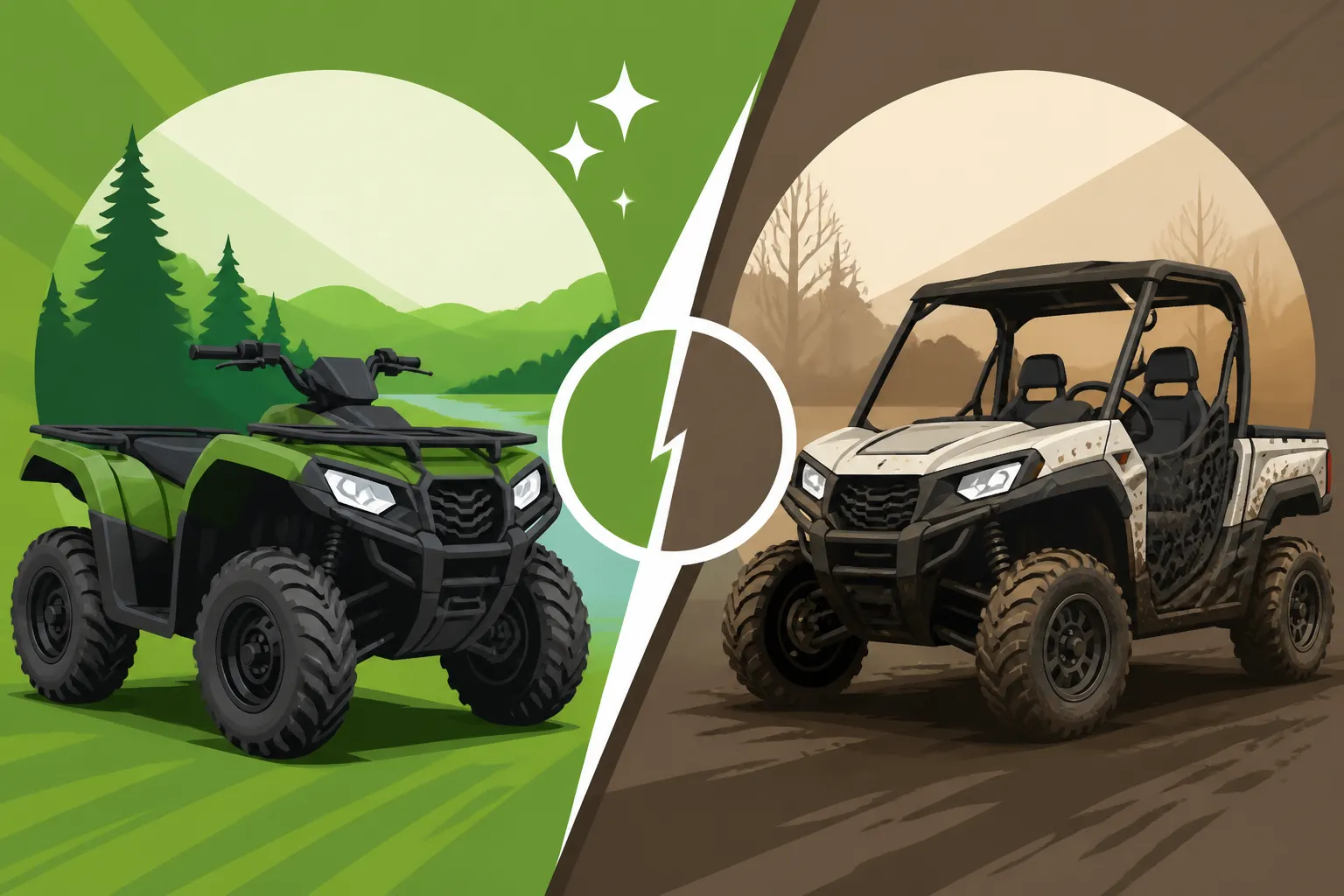
A new machine is often the simpler choice if you want predictable condition, dealer help, and warranty coverage. A used machine can be better value if its history is credible, it passes a careful inspection, and you have money set aside for repairs. Neither option is automatically cheaper once you include taxes, setup, maintenance, insurance, transportation, and eventual resale.
| Factor | New ATV or UTV | Used ATV or UTV |
|---|---|---|
| Purchase price | Usually higher for a comparable class and configuration | Often lower, but condition and demand matter |
| Known history | You start with a clean operating history | Depends on records and how candid the seller is |
| Warranty | May include manufacturer coverage; confirm what it covers and excludes | May have limited or no remaining coverage |
| Immediate repairs | Usually less likely, though setup and early service still matter | More likely if wear, neglect, or deferred maintenance is present |
| Feature choice | More opportunity to select current configurations and accessories | Selection depends on what is for sale |
| Depreciation | The first owner generally bears more early value loss | Some early depreciation may already have occurred |
| Inspection needs | Review the build sheet, delivery condition, and dealer paperwork | Inspect the machine, documents, and service history carefully |
| Best fit | Buyers who prioritize predictability and support | Buyers comfortable evaluating condition and budgeting for unknowns |
Start with the machine’s intended work, not the deal. A quad for occasional trail rides may not need the same features as a side-by-side that will carry passengers, haul supplies, or plow a long driveway. A low asking price is not a bargain if the machine needs tires, a belt, suspension work, or paperwork corrections before it can be used.
A useful way to decide is to compare two complete ownership scenarios: a specific new machine and a specific used one. Write down the amount due at purchase, likely first-year work, and what you expect to spend each year after that. The used option should still look attractive after you account for inspection findings and a repair reserve. The new option should justify its added cost through benefits you actually value, not features you may never use.
What buying new can offer
The most practical advantage of buying new is a clearer starting point. You can usually identify the model, configuration, and included equipment from the dealer’s paperwork. You are not inheriting another owner’s maintenance habits or wondering whether a warning light has been ignored. That does not make a new machine maintenance-free, but it reduces some of the uncertainty that comes with a used one.
A cleaner service history
With a new machine, there is no previous owner whose use you need to reconstruct. You still need to follow the manufacturer’s maintenance schedule, keep service records, and investigate any problem that appears. But you can document the machine from its first service onward, which can help with troubleshooting and may make a later sale easier.
Ask the dealer what happens before delivery. Confirm whether the machine is assembled, inspected, and prepared for the specific use you have in mind. A machine intended for trail riding may need different accessories from one used mainly for work or winter chores. Clarify what is included, what is optional, and whether any requested accessories could affect fitment, warranty coverage, or service.
Warranty and dealer support
A new machine may include manufacturer warranty coverage. The exact terms, duration, exclusions, and service process depend on the manufacturer and model, so read the warranty documents rather than relying on a general sales explanation. Ask how warranty claims are handled, whether service must be done through an authorized shop, and what records you need to keep.
Warranty coverage is not the same as protection against every ownership cost. Routine maintenance, wear items, damage, improper use, and some accessories may not be covered. A warranty also cannot make a poorly matched machine suitable for a job it was not designed to do. Treat warranty support as one benefit in your comparison, not a substitute for checking the machine’s specifications and intended use.
Local service access matters, too. Before committing, ask whether the dealer can maintain the model, how service appointments are handled, and what you should do if the machine is unusable during riding season. A strong service relationship can be valuable, but it is worth confirming what support actually means instead of assuming it includes fast repairs or free transport.
The cost of a fresh start
New usually means paying more upfront than for a comparable used machine. The purchase paperwork may also include setup, delivery, documentation, accessory, or other charges. Ask for a written breakdown of the full transaction and compare the total due, not just a headline price. Terms and charges vary; check current details with the dealer.
Buying new also means you are generally taking on more of the early depreciation. The amount depends on the machine, condition, demand, model changes, and how long you keep it. Do not assume that a particular brand or model will hold its value. Use actual local listings and completed sales where available to understand what comparable machines are being offered for, while remembering that an asking price is not necessarily a sale price.
The new-machine premium can make sense if you plan to keep the vehicle for a long time, need a specific configuration, or place high value on known condition and manufacturer support. It is harder to justify if you expect to sell quickly, rarely use the machine, or could meet your needs with a well-kept used example.
Choosing a configuration that fits
New inventory can make it easier to select a particular engine size, seating arrangement, trim, or accessory package. That is useful when a specific feature is essential, but it can also encourage overbuying. Decide what the machine must do before looking at trim levels.
For a UTV, think about passenger capacity, cargo space, cab protection, and how the machine will be stored. For an ATV, consider rider size, handling, intended terrain, and whether the machine will carry equipment. Check the manufacturer’s specifications for payload and towing limits; do not infer capacity from appearance or assume an accessory increases the rated limit.
If you are considering online accessories after the purchase, check compatibility by exact model and model year before ordering. A listing on Amazon or another retailer is not proof that a part fits your machine or is suitable for how you will use it. When a component affects safety, mounting, electrical systems, or warranty questions, confirm fitment with the manufacturer or a qualified dealer.
Why a used machine can be the better buy
A used ATV or UTV can offer more capability for the same budget, especially when a buyer is willing to consider an older model or a less elaborate trim. It may also have useful accessories already installed. But accessories do not automatically add their full retail cost to the machine’s value, and a low price does not compensate for mechanical problems or weak paperwork.
More machine for your budget, with a catch
Used listings can include machines with different ages, hours, modifications, and histories. That range can help you find a configuration that would cost more new. It also makes comparisons harder: two machines with the same model name may differ significantly in wear, equipment, maintenance, and previous use.
The catch is that the purchase price is only one part of the calculation. An older machine may need fresh tires, battery work, brake service, a belt, suspension repairs, or other maintenance. A machine that sat unused may have problems even if its hours are low. Include likely immediate work in your offer calculation, and leave room for issues an inspection cannot predict.
For more on pricing and the used market, see Buying a Used Machine in Wisconsin and How a Wisconsin Machine Loses Value. These topics can help frame the comparison, but a general value estimate cannot tell you whether a particular machine is in good condition.
Usage history matters more than a polished listing
Ask how the machine was used and maintained. Trail riding, hauling, plowing, farm work, water exposure, and repeated heavy loading can produce different wear patterns. The seller may have records, receipts, or a service log. These are useful, but they should support—not replace—your own inspection.
Pay attention to whether the seller can answer basic questions consistently: when the machine was serviced, what work has been done, whether it has been modified, and why it is being sold. A seller who cannot recall every service date is not automatically dishonest, but gaps in the history add uncertainty. Treat vague answers as a reason to investigate, not as proof of a specific defect.
Hours can be helpful but do not tell the whole story. A machine with fewer hours can still have been worked hard, poorly stored, or used in conditions that accelerate wear. A higher-hour machine with careful service may be a sounder purchase than a low-hour machine with neglected maintenance. See Reading Hours on a Used Machine for a closer look at how to interpret the meter alongside condition and records.
Accessories: useful equipment or someone else’s preferences?
A used machine may come with a winch, plow, cab, windshield, tracks, tires, storage, or other add-ons. Start by asking whether each item works, fits the machine, and suits your use. Inspect mounts and wiring, look for repairs, and confirm whether an accessory is included in the sale documents.
Do not pay extra simply because the seller lists a long accessory package. Consider the condition and replacement cost of each item, not its original retail price. A worn plow blade or an incorrectly installed electrical accessory may be worth little to you. Conversely, a well-maintained accessory that you would otherwise buy can save time and expense.
When used may not be the right move
Avoid stretching your budget to buy a used machine that leaves no money for repairs. If you cannot inspect it, verify the seller’s authority to sell it, or afford a professional check when something looks questionable, the apparent savings may not be worth the risk.
A used machine is also a poor fit if you need a specific configuration immediately and the available examples do not meet the requirement. Modifying the wrong machine can cost more than buying the right one. If you need reliable service for time-sensitive work, consider whether the age, parts availability, and local repair options are acceptable before deciding.
Compare the full cost, not just the asking price
A fair new-versus-used comparison uses the same ownership period and the same assumptions. If you expect to keep the machine for several seasons, compare likely costs over those seasons rather than focusing only on what is due on purchase day. The worksheet below is a useful starting point; fill it with figures from actual quotes, local listings, and the machine’s inspection.
| Cost category | New purchase | Used purchase |
|---|---|---|
| Purchase amount | Written dealer offer, including required charges | Agreed sale amount after inspection |
| Tax and transaction costs | Confirm applicable taxes and itemized dealer charges | Confirm tax treatment and any applicable registration or transaction costs |
| Initial setup | Accessories, protective equipment, delivery, and preparation | Immediate repairs, missing equipment, and setup |
| Maintenance | Scheduled service and normal wear items | Scheduled service plus condition-related catch-up work |
| Insurance | Obtain a quote for the specific machine and use | Obtain a quote; age and equipment may affect the terms |
| Storage and transport | Trailer, storage, and hauling arrangements | Same needs, plus possible repair or recovery transport |
| Financing | Compare the full terms and total borrowing cost | Compare available terms; older machines may be treated differently |
| Resale | Estimate based on comparable local machines | Estimate based on age, condition, history, and demand |
Purchase and transaction costs
For a new machine, ask the dealer to separate the machine itself from setup, delivery, documentation, accessory installation, and other charges. Ask whether any charge is required and what service it covers. A single total can conceal differences between offers, so request written itemization.
For a private used sale, ask what is included and make sure the written sale agreement matches the deal. Do not assume that accessories, spare parts, keys, or service records are included just because they appeared in a listing or were discussed verbally. Record the agreed terms before money changes hands.
Taxes depend on the transaction and applicable state and local rules. Check the current requirements rather than using an old calculator or assuming that a seller’s estimate is correct. Wisconsin Sales Tax and Dealer Fees on a Machine explains what to examine in the purchase paperwork.
Maintenance and repair reserve
New machines still need routine care. Account for the maintenance schedule, fluids, filters, storage preparation, tires, brakes, and any other wear items relevant to the model. Follow the manufacturer’s maintenance instructions and keep receipts.
Used machines need the same routine maintenance, plus a condition-based reserve. Ask a shop for an estimate when the inspection identifies work. If the seller will not allow an inspection or the machine has symptoms that cannot be diagnosed on the spot, do not treat an unknown repair as a zero-cost item. You can walk away, make an offer that reflects the uncertainty, or arrange a professional evaluation before proceeding.
A practical budget separates planned maintenance from unexpected repairs. This keeps one worn component from turning the purchase into a financial emergency. The likely cost and availability of parts and service can vary by model, so call local repair shops before buying an uncommon machine or one with extensive modifications.
Insurance, storage, and hauling
Insurance needs depend on the machine, how it will be used, where it will be kept, and the coverage you choose. Ask an insurer for a quote on the specific ATV or UTV rather than relying on a general estimate. Confirm what is covered while riding, transporting, storing, or lending the machine. See Insuring an ATV in Wisconsin for more on the questions to ask.
Storage and transport can also change the value calculation. If you need a trailer, secure indoor space, or a way to transport the machine to a shop, include those costs. A machine that is affordable but cannot be stored safely or hauled legally and securely may not be practical for your situation.
Financing and trade-ins
Compare financing by reviewing the full terms, total borrowing cost, repayment schedule, and any conditions—not just the monthly payment. A longer repayment period can make payments look easier while increasing the total cost. Confirm with the lender and dealer how the offer works for the machine you are buying.
If you have a trade-in, compare the dealer’s offer with what you might reasonably receive selling it yourself. A private sale may take time and involve paperwork, messages, and meetings; a trade-in may be more convenient. Consider the net cost of the new purchase rather than treating the trade-in allowance as free money.
Inspect a used ATV or UTV before you commit
A seller’s description and photographs are a starting point, not an inspection. Arrange to see the machine in person, preferably in daylight, with enough time to examine it. If you are not comfortable assessing mechanical condition, pay a qualified shop to inspect it before purchase. The cost of an inspection is easier to plan for than an unexpected major repair.
Start with the machine identity and paperwork
Locate the vehicle identification number and compare it with the registration record and sale documents. Check that the number is readable and that the machine’s identity is consistent across the paperwork. Do not buy a machine with altered, missing, or conflicting identification details until the issue is resolved through the appropriate official process.
Ask to see proof that the seller is entitled to sell the machine. Compare the seller’s identification with the names on relevant records, and ask questions if the ownership trail is unclear. A registration record is important, but do not treat it as a substitute for checking the seller’s right to transfer the machine. Wisconsin generally does not title ATVs and UTVs in the same way as road vehicles, which makes complete sale and registration records especially important. Review Why Wisconsin Does Not Title ATVs and What a Wisconsin ATV Bill of Sale Should Carry.
If the machine came from another state, has a lien, or has an unclear ownership history, pause before paying. Ask what documentation is available and confirm what Wisconsin requires for that situation. Wisconsin Registration for an Out-of-State Machine is relevant when a machine’s previous registration is from elsewhere.
Look for signs of hard use or deferred care
Inspect the frame, suspension, wheels, tires, underside, and bodywork. Look for cracks, bent or freshly painted areas, uneven wear, loose fasteners, leaks, corrosion, damaged boots, and improvised repairs. Fresh cleaning does not prove concealment, but it can make leaks and grime harder to spot; take time to look underneath and around joints.
Check the tires for age, damage, uneven wear, and a mismatch with the machine’s use. Examine steering and suspension components for looseness or damage. Inspect the brakes and controls. On a UTV, check seat belts, nets or doors as equipped, steering, cab components, and any safety equipment installed on the machine.
Ask whether the machine has been used for plowing, hauling, water crossings, farm work, or frequent trail riding. Those uses are not automatically disqualifying, but they help focus the inspection. A machine used for winter work may have wear or corrosion that deserves special attention. A machine used in wet or muddy conditions should be examined carefully for water-related damage and maintenance issues.
Start it cold and test it safely
Ask the seller not to warm up the engine before you arrive. A cold start can reveal problems that might be less obvious after the machine has been running. Observe how it starts, idles, and responds to the controls. Look for warning lights, unusual noises, smoke, leaks, or irregular operation. If the seller refuses a cold start or a reasonable inspection, consider that a caution sign.
A short test ride should happen only with the owner’s permission and in a safe, appropriate place. Follow applicable rules, wear suitable protective equipment, and do not test the machine on a public road unless that use is legal and the machine and rider meet the requirements. Check that steering, braking, shifting, and drive operation feel normal. Do not push an unfamiliar machine hard just to prove it works.
For a side-by-side, test each relevant function, including four-wheel drive or other selectable systems if fitted. Check the parking brake, lights, and safety restraints. For a quad, pay attention to steering, drivetrain response, and whether the machine tracks and brakes predictably. The exact checks depend on the model, so consult the owner’s manual or a mechanic familiar with it.
Verify the service story
Ask for maintenance records, repair invoices, and any owner’s manual or warranty paperwork. Match dates and work descriptions to what you see on the machine. A complete service history adds confidence, but no record does not automatically mean the machine was neglected. It means you should price the uncertainty honestly and inspect more carefully.
If the seller reports recent repairs, ask who performed them and whether receipts are available. For modified machines, ask what was changed, who installed it, and whether original parts are included. Changes to the exhaust, suspension, electrical system, tires, or drivetrain may affect reliability, fitment, noise, safety, or serviceability. Do not assume a modification is acceptable simply because it is already installed.
A professional inspection is particularly useful when the machine is expensive, has high use, has visible damage, has been modified, or will be relied on for work. A mechanic can identify issues that a visual check may miss. You can use the findings to negotiate, ask the seller to complete a repair, or walk away.
Wisconsin paperwork, tax, and registration deserve a separate check
A good mechanical inspection does not solve a paperwork problem. Before paying, establish what documents the seller will provide, whether the record is consistent with the machine, and what steps you must complete after the sale. Requirements can depend on the machine and transaction, so verify current instructions with the Wisconsin Department of Natural Resources or another appropriate official source.
New purchase through a dealer
Ask the dealer to explain which documents they will provide and which registration steps they will handle. Get the agreement in writing, including any delivery, accessory, tax, or other charges. Check that the machine’s identification details are correct on the paperwork before you leave.
Do not assume that dealer handling means you have nothing left to do. Confirm when you should receive registration materials, what you need to keep with the machine, and whether any follow-up is required. If the dealer is handling registration, ask for confirmation of what has been submitted and how you can check its status.
Private used sale
Before a private sale, agree on the price, included equipment, payment method, and the documents that will be handed over. Write down the machine’s identifying details, sale date, parties, and transaction terms. Both buyer and seller should keep a copy.
Ask the seller for the registration card and any available ownership, service, and lien information. If the registration card is missing, the seller’s name does not match the record, or there is a lien, do not rely on a promise to fix it later. Resolve the issue before completing the transaction where possible. Buying a Used ATV in Wisconsin: The Paperwork and Transferring a Wisconsin Registration Within Ten Days cover related steps and timing; confirm current requirements before relying on a deadline.
A bill of sale is useful evidence of the transaction, but it does not by itself cure every ownership or registration problem. If the machine’s history is incomplete, ask the Wisconsin DNR what documentation it will accept before buying. Proof of Ownership Without a Title can help explain why buyers should collect a complete set of records rather than expect a title.
Tax and registration details
Tax treatment can differ between a dealer purchase and a private sale, and local tax may apply. Do not assume tax was already handled simply because the seller says it was, or because the machine was previously registered elsewhere. Keep receipts and confirm which documentation is required to show tax paid or claim any applicable credit.
Registration type also matters. Wisconsin public-use and private-use registration serve different purposes, and the appropriate choice depends on where and how the machine will be operated. Do not choose a registration category just because it appears cheaper or simpler. Compare the actual use you plan with current Wisconsin rules and verify whether a registration transfer or new application is required.
If you expect to ride on public trails, also check any separate trail pass requirements that apply to your machine and situation. Registration and trail access are not interchangeable questions. Before a trip, verify the rules for the specific trail system, route, or land where you intend to ride.
Make the choice fit your use and your risk tolerance
The best purchase is the machine that does the work or riding you need without putting your budget under strain. Before shopping, write down the must-haves, the amount you can spend on the entire transaction, and the repair reserve you can keep available afterward. That makes it easier to reject a tempting machine that is a poor fit.
Match the machine to its job
List the main uses: trail riding, carrying passengers, hauling, farm work, plowing, hunting access, or occasional recreation. Then identify the features each use actually requires. Consider the terrain, season, storage, transport, passenger needs, and local riding rules. If a machine will be used in more than one way, check that the configuration is suitable for all of them.
Do not buy more machine than you can maintain or transport. A larger or more capable model may be useful, but it can also add weight, equipment needs, storage challenges, and cost. Check manufacturer limits and requirements for any work task. For road routes or public land, confirm local and land-manager rules rather than assuming that registration makes every use legal.
Set a walk-away price
For a used machine, set a maximum offer before negotiating. Start with a reasonable value for comparable local machines, then subtract the cost of identified repairs, missing equipment, and unresolved risks. Keep a separate reserve for problems that may not appear during a short inspection.
For a new machine, compare written offers on the same configuration and included equipment. Look at the total due and the financing terms, not just a payment estimate. Make sure any trade-in is shown separately so you can understand the transaction.
Be willing to walk away from pressure to pay immediately. A seller may have other interested buyers, but urgency does not make a machine safer or the paperwork more complete. If you cannot verify the identity, inspect the machine, or establish the seller’s authority to sell it, wait.
Use a simple decision rule
Choose new if the added cost is comfortable and you value known condition, a particular configuration, or manufacturer support enough to pay for it. Choose used if you can verify its history and condition, the purchase price leaves room for maintenance, and the machine meets your needs without expensive changes.
If both options are close, compare them over the period you expect to own the machine. Include likely resale value, but do not count on a specific future price. A machine that costs more initially may be a better fit if it needs less immediate work and you will keep it for years. A used machine may be the better choice if its condition is strong and the savings remain meaningful after repairs and transaction costs.
Before handing over money, confirm the machine’s identity, inspect it, collect the paperwork, and understand your next registration and tax steps. When a detail is uncertain, verify it before the sale rather than assuming it can be sorted out later.
Frequently Asked Questions
Is a new ATV or UTV always more reliable than a used one?
Not always. New condition removes uncertainty about previous owners, but a machine can still have defects or be poorly matched to its use. A well-maintained used machine may be dependable. Compare the specific machine, its records, inspection results, and available support.
Are used machines cheaper to own?
They can be, but a lower purchase amount does not guarantee a lower total cost. Repairs, deferred maintenance, missing equipment, and transport can narrow or erase the savings. Add those costs to the purchase comparison before deciding.
What should I check first when buying used in Wisconsin?
Start with the machine’s identity and the seller’s paperwork, then inspect its condition and service history. Confirm that the seller can transfer it and that you understand the applicable tax and registration steps. Do not complete the sale if important identity or ownership details conflict.
Should I have a mechanic inspect a used machine?
A professional inspection is a sensible choice when the machine is costly, modified, heavily used, has visible problems, or will be important for work. It is also useful when you lack the tools or experience to assess it. Ask for the inspection before committing to the purchase.
Should I buy the machine with the most accessories?
No. Buy accessories that fit your intended use and are in sound condition. Check compatibility and installation, and value used accessories based on their condition and what they would actually save you—not their original retail price.
Disclaimer
This article is for general informational purposes only and does not constitute professional advice. Laws, prices and regulations vary by location and change over time. Consult a qualified professional for guidance on your specific situation.