Winching Out of a Northwoods Bog
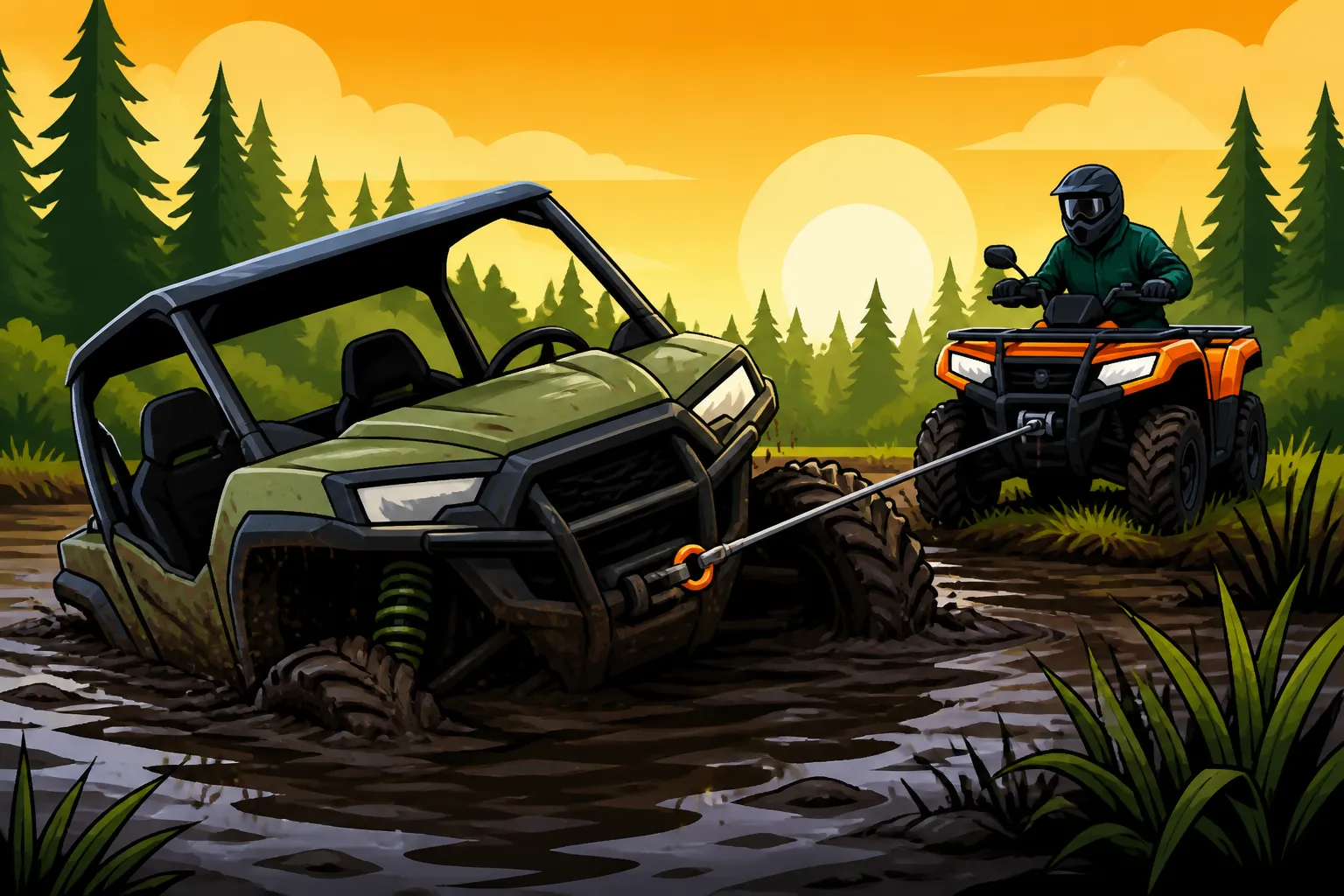
A Northwoods bog can turn a relaxed ATV or UTV ride into a stressful recovery fast: tires spin, the machine sinks, and every extra throttle burst makes the hole worse. The safest response is to stop, assess the ground and your equipment, then winch deliberately from a suitable anchor. This guide walks through that process and explains how to reduce damage to trails and land.
Assess the machine and the bog before winching
Stop spinning and check your position
When the tires start digging, let off the throttle. Spinning tires can bury a machine to its frame, pack mud around the tires, and make a simple pull much harder. Put the transmission in park or neutral as appropriate for your machine, set the brake, and take a moment to look before touching the winch.
Check how deeply the machine has sunk, whether the belly or frame is resting on the ground, and whether the tires can turn freely. Look for water, hidden stumps, roots, rocks, and soft shoulders around the machine. A bog may have firmer ground close by, but stepping onto it without checking can put you in the same trouble. Keep people away from the tires and the line path while you assess.
Think about the direction of the easiest exit, not necessarily the direction you were originally travelling. A short pull back toward firmer ground may be safer than trying to force the machine forward through a deeper section. If the machine is sharply tilted, pinned against an obstacle, or at risk of rolling, stop and reassess rather than applying winch tension. A winch is meant to move a machine, not stabilize a dangerous position.
Decide whether a winch is the right recovery
A winch can help when the machine is stuck but stable, the line can pull toward a sound anchor, and the recovery path is reasonably clear. It may not be the right answer if the machine is badly angled, the anchor is questionable, the line would cross a sharp edge, or the pull would drag the vehicle across another obstacle. In those situations, get help from another rider or a recovery professional rather than improvising.
If another machine is available, don’t assume it automatically makes a safe anchor. A recovery vehicle can also slide, tip, or get pulled into the bog. It needs a secure position, a proper recovery point, and a controlled setup. Keep bystanders well back, especially from the line and any attachment points.
Before choosing a route out, consider the condition of the trail itself. A wet, rutted trail can be more fragile than it looks, and driving around a muddy section may widen damage into vegetation or soft ground. Reviewing [Wisconsin Trail Difficulty Ratings] before a ride can help you choose trails suited to your machine and experience. If the trail is already deteriorating, follow posted closures and avoid making the damaged area larger.
Prepare the winch, line and anchor
Use suitable recovery equipment
Use equipment designed for the load and recovery method, and follow the instructions for your winch and accessories. A winch line, extension, tree strap, shackle, and vehicle attachment point all need to be appropriate for the job. Inspect the gear before loading it: look for fraying, cuts, crushed sections, damaged stitching, corrosion, or a winch hook that no longer closes properly.
A tree strap spreads the load around a tree and helps protect its bark. A rated recovery point on the machine is essential; do not attach a winch line to a trailer ball, a rack, a bumper that is not intended for recovery, or an unverified suspension component. If you are unsure whether a point is designed for pulling, consult the machine’s manual or a qualified mechanic before relying on it.
A kinetic recovery rope is designed for a different kind of pull than a winch line. Don’t substitute one for the other simply because it is available. Keep gloves on when handling a cable or line, and use a line damper where appropriate. Never stand over, straddle, or step across a line under tension.
| Recovery item | What it is for | Check before use |
|---|---|---|
| Winch line and winch | Controlled pulling from the machine | Condition, attachment, drum winding and manufacturer instructions |
| Tree strap | Protecting a suitable tree anchor | Stitching, wear and correct placement around the trunk |
| Rated shackle or connector | Joining compatible recovery components | Rating, damage and secure connection |
| Line damper | Helping reduce the line’s movement if equipment fails | Correct placement and that it cannot snag |
| Gloves | Protecting hands while handling line | Fit, grip and damage |
| Recovery shovel | Clearing packed mud or material near tires | Stable handle and a safe place to use it |
For a more complete kit, see [Recovery Gear for Wisconsin Mud]. A modest, well-maintained setup is more useful than a pile of accessories you have never inspected or practised using.
Choose an anchor and plan a straight pull
Look for a sound anchor in line with the intended pull. A healthy, appropriately sized tree may work when it is permitted to use one and can be protected with a tree strap. Avoid dead, leaning, rotten, or visibly damaged trees, and don’t wrap a bare winch cable around a trunk. If no safe anchor is available, do not attach to whatever happens to be nearby. Repositioning the machine or calling for help is better than risking a failed anchor.
Keep the line as straight as practical between the winch and the anchor. A sharply angled pull can place sideways stress on the winch, mount, anchor, or machine. If a change of direction is necessary, use only equipment and a setup intended for that purpose, with a suitable rated pulley block and secure anchor arrangement. If you are unfamiliar with that rigging, don’t experiment in the bog.
Clear the intended path. Remove loose branches or other small obstructions only when it is safe and allowed, and avoid cutting or damaging vegetation. Check where the tires will land once the machine moves: a successful pull is not much help if it ends with the vehicle sliding into a deeper hole. Have one person operate the winch while other riders stay well clear and communicate from a safe position.
Winch out in controlled steps
Follow a deliberate recovery sequence
A slow, steady pull gives you more control than repeated bursts of throttle. Use the winch according to its instructions, keep hands clear of the drum and fairlead, and make sure the line winds neatly onto the drum rather than bunching at one side. If the line begins to spool unevenly, or if anything shifts unexpectedly, stop and correct the problem before continuing.
A careful recovery generally follows these steps:
- Tell everyone to move clear. Keep riders and bystanders away from the line, anchor, and likely path of the machine.
- Prepare the machine. Remove loose cargo if it affects balance, select the appropriate gear or neutral position as directed by the manual, and ensure the machine will not roll unpredictably.
- Connect the line to a proper recovery point. Use compatible, undamaged equipment and secure the connections as intended.
- Take up slack gently. Confirm that the anchor and attachment points are holding before applying a steady pull.
- Guide the machine only from a safe position. If the tires need help, a rider may make a small, controlled input only when the machine’s manual and the recovery setup allow it. Avoid wheelspin.
- Pause if the setup changes. Stop if the anchor moves, the line shifts, the machine tilts, or equipment makes an unusual sound.
- Move onto firm ground and secure the machine. Once free, stop the pull, disconnect safely, and check the vehicle before riding away.
A spotter can help the operator see the tires and the route, but the spotter should never stand in the line’s path or between the machine and its anchor. Agree on simple signals before starting, especially if wind, distance, or engine noise makes conversation difficult. If communication breaks down, stop the pull.
Recognize when to stop and reset
A winch recovery is not a contest. Stop if the anchor begins to lean or move, the line or connector shows signs of damage, the machine starts to roll, or the pull is making the situation worse. Stop too if the winch overheats, the line binds, or the machine remains pinned despite a controlled pull. Let equipment cool or change the plan according to the manufacturer’s instructions.
Don’t use a running start to yank a stuck machine free while a winch line is attached. Shock loading can place sudden stress on the line, attachment points, anchor, and frame. Avoid standing near a loaded line, reaching into the fairlead, or touching a cable that is under tension. If the line breaks or a connection fails, the danger can extend beyond the person holding the winch remote.
Sometimes the best reset is to clear packed mud from around the tires, place traction boards where they can be used safely, or move the anchor to improve the pull angle. Make changes only after releasing tension and confirming the machine cannot move unexpectedly. If you cannot improve the setup safely, call for assistance. A recovery that takes longer is preferable to a damaged machine or an injured rider.
Protect Wisconsin trails and prevent another bog recovery
Avoid widening the hole or damaging public land
In the forests and trail systems of northern Wisconsin, a machine that leaves the designated route can damage plants, soil, and trail edges. Don’t drive around a bog through brush or across a wetland to find a firmer path. Stay on the marked route, obey closure signs, and follow the rules for the land you’re riding on. Trail conditions and access can change, so check local information before setting out. [Checking Wisconsin Trail Status Before You Drive] is a useful part of trip planning, particularly after wet weather or during spring thaw.
If a trail is badly rutted or blocked, don’t assume it is open just because you can see tire tracks. Use [Wisconsin County Forest Trail Systems] information and posted notices to understand where riding is permitted. If your recovery creates a hazard or causes noticeable trail damage, report it to the land manager or the appropriate local contact. [Reporting Trail Damage in Wisconsin] covers why reporting helps crews address issues before more riders encounter them.
Mapping can help you understand where you are and spot nearby routes or staging areas, but a map should not be treated as permission to travel off trail. Riders sometimes use onX Offroad to review route context before a trip and save map information for areas where cell service is unreliable. It can also help you identify where you may have turned away from a designated route, but always compare app information with current signs and local rules.
Make a recovery less likely next time
The easiest bog recovery is the one you avoid. Before riding, check weather and trail conditions, choose a route that suits your machine, and be cautious where water covers the trail or hides the ground. Don’t follow another vehicle blindly through a muddy section; a heavier or wider machine may have crossed a line that your own tires cannot manage. If you’re uncertain about the ground, stop before entering and inspect it from a safe spot.
Travel with a prepared group when possible. Let someone know your route and expected return, bring recovery gear you know how to use, and keep essential equipment accessible rather than buried under cargo. In areas with weak reception, save useful route information ahead of time. onX Offroad may be helpful for offline route reference, but carry a backup plan and don’t rely on a phone alone. [Cell Dead Zones in Northern Wisconsin] and [Wisconsin Trailhead Parking and Staging] can help you plan around communication gaps and identify practical starting points.
After getting out, inspect the machine before riding on. Check the winch line, hooks or connectors, mounting points, tires, and undercarriage for damage or packed debris. Look for unusual noises, leaks, or parts that shifted during the pull. If anything appears damaged, stop and arrange a proper inspection rather than assuming the machine is fine because it moves.
Finally, take a minute to learn from the recovery. Was the route too wet, was the machine’s load affecting traction, or did you enter a section without a clear exit? Small changes—turning around sooner, waiting for firmer conditions, or carrying better-rated recovery equipment—can make the next Northwoods ride safer and less stressful. onX Offroad can support route planning, but good judgment, current trail information, and respect for closures matter more than any map.
Disclaimer
This article is for general informational purposes only and does not constitute professional advice. Laws, prices and regulations vary by location and change over time. Consult a qualified professional for guidance on your specific situation.