Riding Near Crivitz and Wausaukee
Crivitz and Wausaukee make a handy base for exploring Marinette County by ATV or UTV, but nearby roads and trails don’t automatically share the same access rules. This guide explains how to plan a ride, check what’s open, prepare for changing trail conditions, and avoid common route, registration, and staging-area surprises.
Plan a ride around Crivitz and Wausaukee
Know the difference between trails and road routes
Crivitz and Wausaukee sit in Marinette County, where riding opportunities can include designated trails, forest roads, and local road routes. Those terms matter: permission to ride one segment does not mean you can continue along every nearby road or forest track. A route may be open only where local rules allow it, and a forest road may have separate access restrictions.
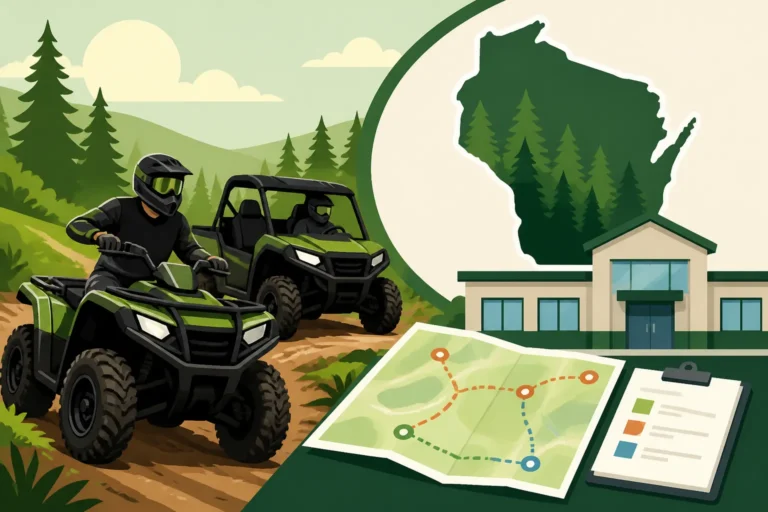
Before setting out, trace your intended ride on a current county map and look for the exact signs or route designations where roads connect with trails. A tempting gravel road on the map is not necessarily an ATV route. Likewise, a short road connection may be the only legal link between two riding areas, so missing it can send you back the way you came.
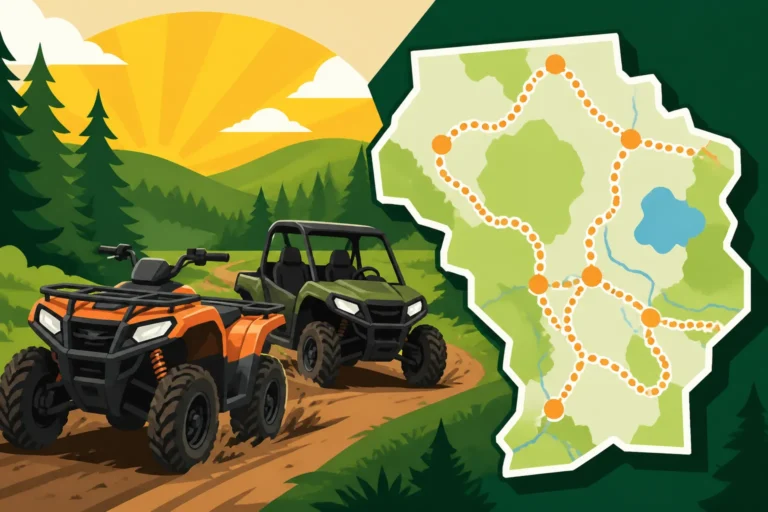
For a broader sense of the county riding network, see Marinette County's 200 Miles and Marinette County Year-Round Riding. Treat general network descriptions as a starting point, not a promise that a particular segment is open on your travel date. Local closures, construction, weather, and seasonal rules can change what you can ride.
Choose your base and day’s route
Crivitz can work well as a place to gather supplies, meet your group, or start a day of exploring the surrounding area. Wausaukee offers another useful reference point when planning a ride through the county. Your best base depends on where the open trails and legal connections are, where your group is staying, and whether you want a short outing or a longer loop.
Build your route around a realistic turnaround point rather than assuming you’ll complete a large circuit. A group with new riders, children, or machines with limited range may prefer a shorter out-and-back ride. Experienced riders can plan a longer day, but should still leave room for slower travel, rest stops, and unexpected detours.
| Planning choice | Works well when | Check before leaving |
|---|---|---|
| Short out-and-back ride | You’re learning the area or riding with a mixed-skill group | Trail access, turnaround point, and fuel range |
| Longer loop | Your group is comfortable navigating and has enough daylight | All connecting segments, closure notices, and alternate routes |
| Ride based around a town | You want to stop for supplies or food | Whether the route legally reaches the stop and where parking is allowed |
| Wet-weather outing | You have a flexible schedule and suitable equipment | Recent conditions, trail restrictions, and any temporary closures |
The map should guide the day, but it shouldn’t dictate the pace. If a trail is rougher, wetter, or more crowded than expected, turn around or choose a permitted alternative rather than pushing on just to preserve the original plan.
Check maps, access, and conditions before you go
Use maps to confirm each connection
Start with a current Marinette County trail map or other official local map, then compare it with posted signs at the trailhead. Pay close attention to boundaries, road crossings, and connections between public trails and local routes. A map app can help you see where you are, but a phone’s suggested line is not proof that motorized riding is allowed there.
For help finding the right map, use [Finding a Wisconsin County Trail Map]. You can also use a navigation app such as onX Offroad to follow your position and save a route for reference. It’s especially useful when a group has several machines and riders need a shared sense of direction. Still, carry a paper map or an offline backup: cellular coverage can be unreliable in parts of northern Wisconsin, and a phone battery can drain faster than expected in cold weather.
If you use onX Offroad, download the map area before leaving reliable service and check that the map shows the trail types you intend to ride. Keep official maps and signs as your authority for access. Digital mapping is a navigation aid, not permission to use a road, forest track, or private property.
Verify openings and trail conditions
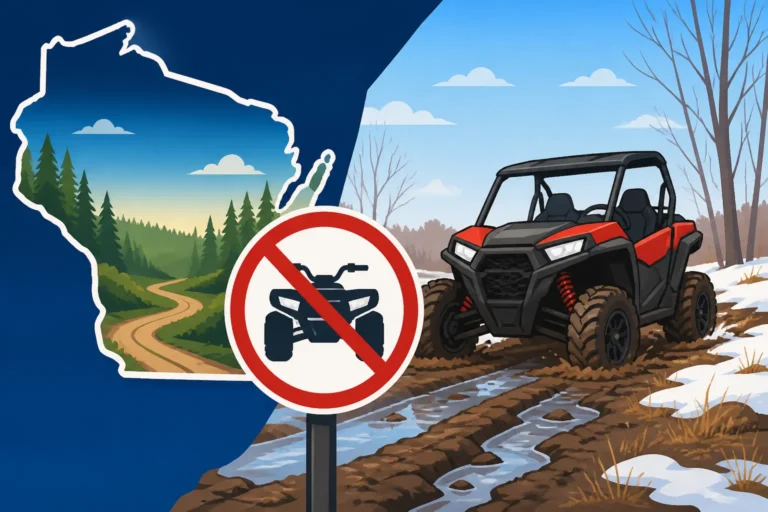
Trail access can change with the season and weather. A route that was open during a dry summer weekend may be muddy or restricted after heavy rain. Spring thaw is another time to be cautious: soft ground can be damaged easily, and temporary closures may be put in place to protect the trail surface.
Check current local notices before loading the machines onto the trailer. [Checking Wisconsin Trail Status Before You Drive] is a useful reminder to make this a pre-trip task, not something you discover after arriving. If you’re considering riding after rain, [Riding a Wisconsin Trail After a Wet Week] can help you think through why conditions deserve extra attention.
When you reach a closure sign, follow it even if the trail ahead looks passable. Riding around a barrier can damage the trail, create conflict with land managers or nearby residents, and put your group somewhere it is not allowed to be. If conditions are uncertain, contact the relevant local office or trail authority before you leave home.
Prepare your machine, group, and paperwork
Confirm registration, passes, and rider requirements
Before the trip, check that each machine has the registration or pass required for the type of riding you plan to do. Requirements can differ depending on whether a machine is registered in Wisconsin or another state, and whether you’re riding a public trail, a road route, private land, or another type of property. Don’t assume that one permit or sticker covers every place you intend to ride.
Visitors should review [Wisconsin Non-Resident Trail Pass] and confirm whether their machine needs a pass for the planned public trails. Wisconsin residents should make sure the machine’s registration type is appropriate for public riding. Keep required documents accessible, and check that decals or passes are displayed as instructed.
Rider rules also deserve a quick check, especially when children or teenagers are coming along. Wisconsin has safety-certification and age requirements that depend on the rider and the machine. Review [Wisconsin's ATV Safety Certificate Requirement] before the trip, and confirm the applicable rules for both ATVs and UTVs. Helmets and eye protection are sensible essentials even when a particular ride or rider might not be subject to the same requirements as another.
Stage the ride and pack for a remote day
Use a designated trailhead or other clearly permitted staging area. Do not block a driveway, gate, access road, or business lot simply because it looks convenient. Wisconsin Trailhead Parking and Staging is a helpful topic to review when deciding where to unload, park the truck, and leave a trailer.
Plan fuel around the actual route rather than the distance you hope to travel. Detours, slow going, soft conditions, and frequent stops can all increase fuel use. Before starting, identify likely fuel options and confirm they are reachable by a legal route. Fuel Planning for a Wisconsin Trail Day can help you think through range and reserve fuel. Avoid counting on a stop that requires riding along an unverified road.
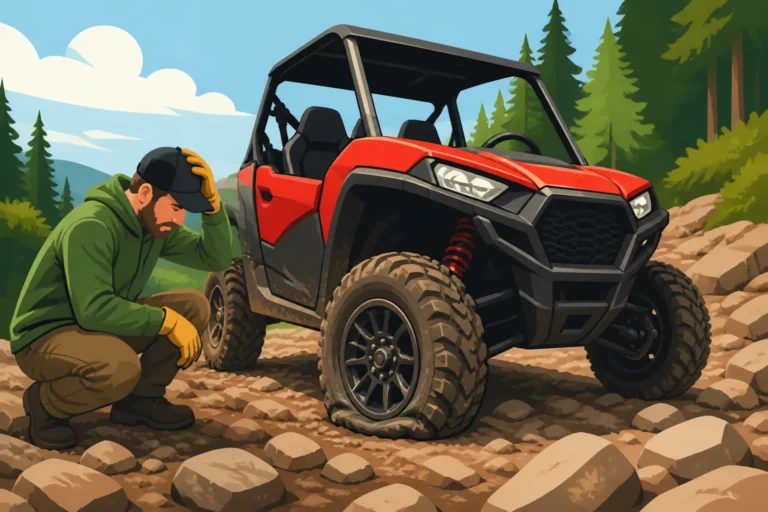
Pack water, food, a basic first-aid kit, a tire repair kit, a tool kit, a tow strap, and warm or rain-ready layers. Give each rider a map or a clear meeting plan in case the group gets separated. Agree on simple rules before starting: ride at the pace of the least experienced person, stop at confusing junctions, and wait for the group after major crossings. If a rider falls behind, the others should stop somewhere safe rather than continuing until they lose sight of one another.
Ride responsibly and adapt to the day
Set expectations for trail difficulty and group pace
A route’s appearance on a map won’t tell you exactly how it will feel from the seat. Surface, recent rain, ruts, visibility, and traffic can make the same trail feel very different from one visit to another. Review Wisconsin Trail Difficulty Ratings where ratings are available, but use them as guidance rather than a guarantee that every rider will find the route easy.
For a family group, choose a manageable route and talk through what to do at road crossings, tight turns, and crowded sections. New riders may need frequent breaks to stay focused. More experienced riders can help by keeping a steady, predictable pace and avoiding sudden acceleration or sharp maneuvers near others.
Give other trail users room, slow down near homes and businesses, and keep noise and dust in mind. Trail riding is part of a shared landscape, not a closed course. If you encounter a posted restriction, a landowner, or a closure, stop and reassess rather than assuming that a nearby track is an acceptable substitute.
Have a backup plan for navigation and changing conditions
Save your route and key locations before leaving service, but don’t rely on a phone as your only way to navigate. A paper map, a charged external battery, and a clear meeting point give the group options if devices fail. [Cell Dead Zones in Northern Wisconsin] is worth keeping in mind when you’re planning communication between separated riders.
Make a simple backup plan before unloading: identify a shorter route, a safe turnaround point, and the trailhead or lodging location where everyone should regroup. If weather moves in, a machine develops a problem, or a trail is closed, use that plan instead of improvising at a confusing junction. Keep the day flexible enough that turning back feels like a reasonable choice, not a failed trip.
Crivitz and Wausaukee can be convenient starting points for Marinette County riding, but a smooth outing depends on checking access and conditions as carefully as you plan the route. Confirm each connection, use current local information, and leave enough time and fuel to adjust your plans once you’re on the trail.
Disclaimer
This article is for general informational purposes only and does not constitute professional advice. Laws, prices and regulations vary by location and change over time. Consult a qualified professional for guidance on your specific situation.