Two Quads on One Trailer Bed
The excitement of a Wisconsin ATV or UTV adventure often starts long before the trail, usually in your driveway, trying to figure out how to get all your machines to the destination. Juggling two quads or side-by-sides on a single trailer can feel like a puzzle, but with the right approach, it's absolutely doable, safe, and entirely within Wisconsin's rules. This guide will walk you through the practical steps and considerations to ensure your precious cargo arrives at the trailhead secure and ready for fun.
Assessing Your Trailer's Capabilities and Limitations
Before you even think about backing up to load, the most critical first step is to truly understand what your trailer can handle. It's not just about fitting the machines on the deck; it's about the total weight, how that weight is distributed, and whether your tow vehicle is up to the task. Overloading a trailer is a recipe for disaster, from blown tires and bent axles to dangerous sway on the highway.
Understanding Gross Vehicle Weight Rating GVWR and Payload Capacity
Every trailer has a Gross Vehicle Weight Rating (GVWR), which is the absolute maximum weight the fully loaded trailer can weigh, including its own empty weight (often called "curb weight") plus whatever you put on it. The difference between the GVWR and the trailer's curb weight is your payload capacity – this is the maximum weight of the cargo you can safely add. Many riders underestimate the weight of their machines, especially if they've added accessories like winches, plows, or heavy tires. A utility quad might weigh 700-800 pounds, while a larger side-by-side can easily tip the scales at 1,500 pounds or more. Two of those quickly add up!
You'll find your trailer's GVWR on a sticker or plate, usually on the tongue or frame. If you can't find it, or if you're unsure about the actual weight of your machines, it's worth a trip to a public scale. Many truck stops or recycling centers have them, and a few dollars for peace of mind is always a good investment. Knowing these numbers is fundamental to preventing an unsafe and potentially illegal towing situation, keeping you and other drivers on Wisconsin's roads safe.
Types of Trailers for Hauling Multiple ATVs or UTVs
Not all trailers are created equal for hauling multiple off-road machines. You might have a simple utility trailer with a ramp gate, a dedicated ATV trailer with integrated ramps and tie-down points, or even an enclosed cargo trailer. Each has its pros and cons. A standard 6×10 or 6×12 utility trailer might fit two smaller ATVs end-to-end, but a wider 7×12 or 7×14 open deck is often necessary for larger quads or side-by-sides, especially if you plan on side-by-side or angled loading.
Dedicated ATV trailers are designed with this purpose in mind, often featuring lower decks for easier loading, multiple tie-down D-rings, and sometimes even side-loading ramps. Enclosed trailers offer protection from the elements and theft, but they add significantly more weight and typically require a larger, more capable tow vehicle. Consider the ramp system as well; a single narrow ramp is fine for one quad, but trying to maneuver two machines, or a wider UTV, up a single narrow ramp can be challenging and risky. Dual ramps or a full-width ramp gate make the job much safer and easier when loading multiple machines.
Tongue Weight and Proper Load Balance
Tongue weight refers to the downward force the trailer's tongue exerts on the hitch ball of your tow vehicle. This is incredibly important for stable towing. As a general rule of thumb, your tongue weight should be 10-15% of the total loaded trailer weight. Too little tongue weight, and the trailer can sway dangerously, causing you to lose control. Too much, and it puts excessive strain on your tow vehicle's suspension and can lift the front wheels slightly, impacting steering and braking.
Achieving proper tongue weight with two machines involves strategic placement. Generally, you want the heaviest part of your load to be centered over or slightly forward of the trailer's axle(s). If you have two machines, try to position the heavier one slightly forward. You might need to experiment a bit, moving the machines an inch or two at a time, to find that sweet spot where the trailer tracks straight and doesn't make your tow vehicle feel squirrely. This balance is crucial for a smooth and safe tow, especially when encountering crosswinds or uneven roads on your way to the Wisconsin trails.
Strategic Loading Techniques for Two Machines
Once you understand your trailer's limits, it's time to get those machines loaded. This isn't just about cramming them on; it's about making smart choices to maximize space, maintain stability, and ensure everything stays put during transit. Thinking through your loading strategy beforehand can save a lot of frustration and prevent potential damage.
Front-to-Back Loading for Stability and Space
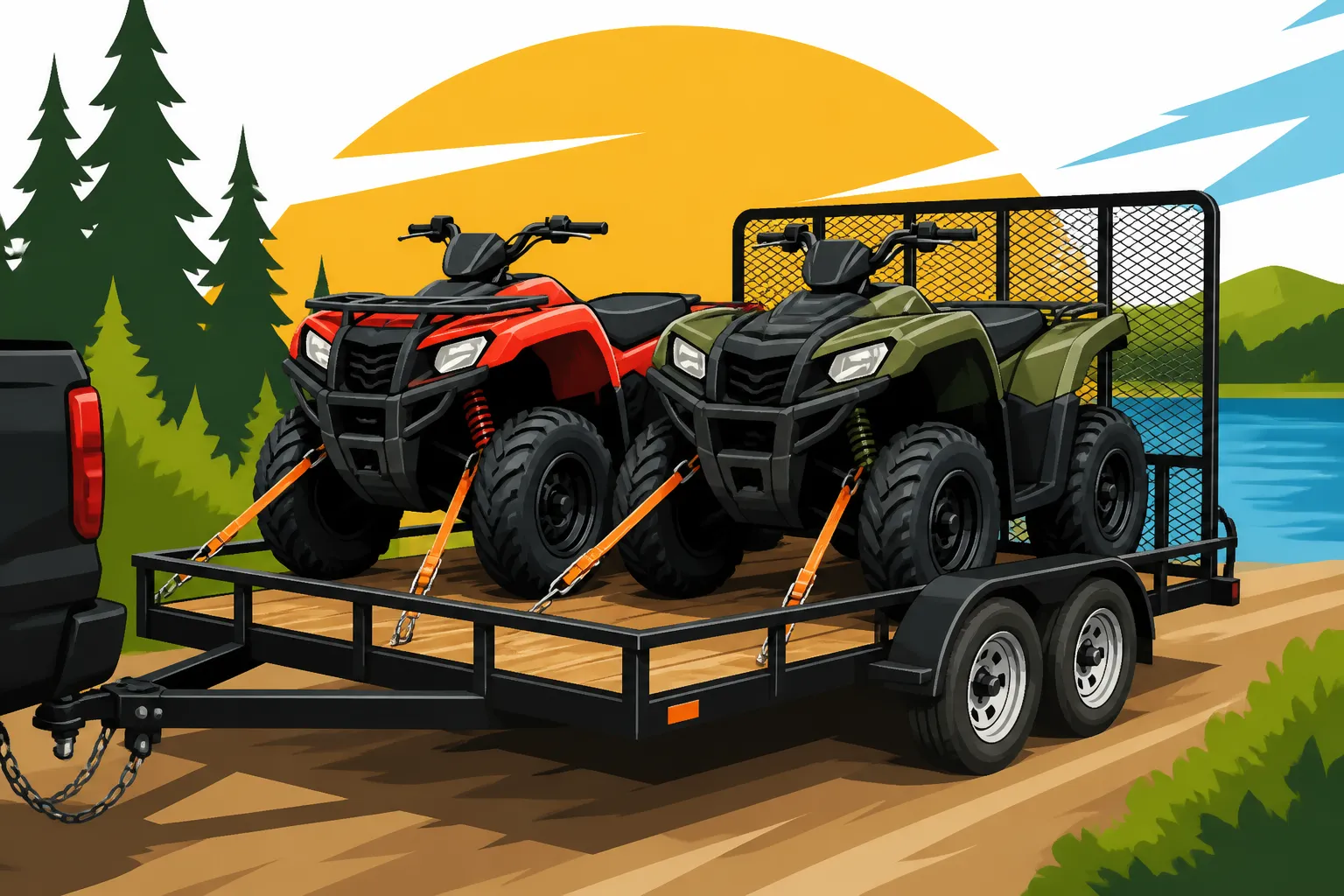
One of the most common and often easiest ways to load two ATVs, especially smaller or medium-sized ones, is front-to-back. This method works well on utility trailers that might not be wide enough for side-by-side loading. You simply load one machine facing forward, drive it as far forward as you can while still leaving space for the second. Then, load the second machine directly behind it, usually facing backward to conserve space and often to improve weight distribution.
When loading front-to-back, ensure the machines are offset slightly if possible, so handlebars don't conflict, or so you can access tie-down points. If your trailer has a ramp gate, loading the rear machine facing backward means you can drive it off directly. Remember to consider ramp capacity and traction, especially if the ground is soft or slippery. Always load the heavier machine first if you plan to put it towards the front, or position it over the axles to help with that critical tongue weight.
Angled and Staggered Loading for Wider Rigs
For larger ATVs or side-by-sides, or if your trailer isn't quite long enough for front-to-back, angled or staggered loading becomes your friend. This usually requires a wider open-deck trailer, often 7 feet or wider. With angled loading, you drive one machine onto the trailer and then position it at an angle, perhaps with the front wheels against one side rail. Then, you load the second machine, also at an angle, tucking its nose into the open space created by the first machine's angle. This crisscross pattern can make surprising use of deck space.
Staggered loading is similar but often less angled. You might drive one machine forward on one side of the trailer, then load the second machine slightly behind the first, on the opposite side. This works particularly well if one machine is shorter than the other. The goal with both angled and staggered loading is to make the most of your trailer's footprint while keeping the overall load centered and balanced. It might take a few tries to find the optimal arrangement for your specific machines and trailer, but it's worth the effort for a secure fit.
Optimizing Weight Distribution Over the Axles
No matter how you load, always strive to get the bulk of the weight concentrated over the trailer's axles. This is where the trailer is designed to carry the load most effectively. If you have a single-axle trailer, aim for the center. For tandem axles, spread the weight evenly between them, or slightly forward. Avoid placing heavy machines too far forward or too far back, as this will lead to unstable tongue weight – either too much on the hitch or not enough, both of which are dangerous.
When two machines are loaded, visualize their combined center of gravity. You want this point to be over or just ahead of the axle(s). If one machine is significantly heavier than the other, try to place that heavier machine in the prime position over the axle. This might mean loading the lighter machine first or adjusting its position after the heavier one is in place. Remember, every pound counts, and proper weight distribution contributes immensely to a stable tow, minimizing sway and making your journey to the [Wisconsin Trails That Link Two Towns] much safer.
The Art of Securing Your ATVs and UTVs for the Journey
Once your machines are positioned, the real work begins: securing them. This isn't a step to rush or skimp on. Loose machines can shift, cause damage, and even come off the trailer, creating a life-threatening hazard for you and others on the road. Investing in good quality tie-downs and using them correctly is non-negotiable.
Choosing the Right Straps and Tie-Down Points
Forget bungee cords and old rope – you need strong, reliable straps. Ratchet straps are generally preferred for their ability to apply significant tension and hold it securely. Cam buckle straps can work for lighter machines but don't offer the same cinching power. Always choose straps with a working load limit (WLL) that significantly exceeds the weight of your machines. Don't just look at the breaking strength; the WLL is the safe working capacity. You should have at least four straps per machine, one for each corner, for optimal security.
When attaching straps, always aim for the sturdy frame components of your ATV or UTV. Avoid strapping to handlebars, plastic fenders, footwells, or suspension A-arms that can compress. Look for solid frame rails, bumper mounts, or dedicated tie-down loops if your machine has them. The goal is to compress the suspension slightly, so the machine can't bounce and loosen the straps. When you pull down on the strap, the machine's suspension should compress a bit, indicating a good, firm hold. Remember that [Strapping a Machine Down for the Freeway] correctly is critical.
The Double-Check Method and Mid-Trip Inspections
Before you ever pull out of the driveway, implement the "double-check" method. Walk around your trailer, checking every strap, every connection, and every component. Give each strap a good tug – it should be taut, and the machine shouldn't visibly shift. Check your trailer lights, safety chains, and coupler connection. Are the ramps securely stowed? Is the tongue jack retracted? It sounds basic, but these simple checks prevent so many preventable incidents.
But the double-check doesn't end in the driveway. A critical part of hauling multiple machines, especially on longer trips through Wisconsin, is performing mid-trip inspections. After 15-20 minutes of driving, pull over in a safe location and re-check all your straps. Road vibrations and initial settling of the load can cause straps to loosen slightly. Then, plan to re-check every couple of hours or whenever you stop for fuel or a break. This routine vigilance ensures that even if a strap starts to work loose, you catch it early, long before it becomes a major problem.
Protecting Your Machines from Rub and Wear
While securing your machines, remember that metal-on-metal or strap-on-plastic contact can lead to damage during transit. The constant vibration and jostling of the road, especially on rougher Wisconsin highways, can cause straps to chafe paint, rub through plastic, or even wear down metal edges. This is where protective measures come in handy.
Use soft ties or axle straps (also called soft loops) around painted parts or areas where a ratchet hook might cause damage. These soft loops can then be connected to your ratchet straps, providing a buffer. You can also use old towels, rags, or specific strap protectors (often made of tough fabric or rubber) under your straps wherever they cross vulnerable points. This small step can prevent unsightly marks and keep your machines looking good, preserving their value, especially if you ever decide to sell them or trade them in at a [Wisconsin Dealer License Rules for ATV Sales] establishment.
Legalities, Safety Checks, and Road Etiquette
Towing isn't just about loading and strapping; it involves adhering to traffic laws, performing thorough safety checks, and driving courteously. When you're hauling two machines, your rig is longer, heavier, and less nimble, so extra caution is essential.
Wisconsin Towing Laws and Equipment Requirements
Wisconsin has specific laws regarding towing that all riders need to be aware of. Your trailer must have working taillights, brake lights, and turn signals that mirror your tow vehicle. Safety chains are mandatory and should be crossed under the trailer tongue to cradle it if the coupler fails. If your trailer and load exceed a certain weight (usually 3,000 pounds, but check current regulations), your trailer will likely require its own braking system, which needs to be properly connected and functional. Always check that your [Wisconsin Trailer Plate Cost] is current and properly displayed.
Furthermore, ensure your tow vehicle's hitch is rated for the combined weight of your loaded trailer. A Class III hitch is usually sufficient for most ATV/UTV trailers, but always match the hitch capacity to your actual towing needs. Don't forget your rearview mirrors; if your trailer is wider than your tow vehicle, you might need extended mirrors to maintain proper visibility. Compliance with these laws isn't just about avoiding fines; it's about fundamental safety for everyone on the road.
Pre-Trip Inspections: More Than Just Kicking Tires
Before embarking on any journey, especially one involving two valuable machines, a comprehensive pre-trip inspection is non-negotiable. This goes far beyond just a quick visual. Start with your tow vehicle: check tire pressure (including the spare!), oil levels, coolant, and brake fluid. Ensure all lights are functional. Then move to the trailer: tire pressure on all trailer tires, lug nut tightness, bearing condition (listen for grinding, feel for excessive heat after a few miles), and the overall integrity of the frame and deck.
Check your ramps. Are they secure? Stored properly? Is the hitch coupler tight on the ball, and is the safety pin in place? Are the safety chains properly attached? And, of course, a final walk-around of your machines themselves: ensure nothing is loose, fuel caps are tight, and no gear is precariously balanced. A thorough pre-trip inspection only takes a few minutes, but it can literally save your trip, your machines, and potentially lives.
| Checklist Item | Tow Vehicle Check | Trailer Check | Machine Load Check |
|---|---|---|---|
| Tires | Pressure (all 5), tread, spare | Pressure (all), tread, lug nuts tight | No contact with other machines/trailer parts |
| Lights | Headlights, taillights, turn signals, brake | Taillights, brake lights, turn signals, markers | Clear of obstruction |
| Fluids | Oil, coolant, brake, transmission | N/A (check axle bearings if applicable) | Fuel caps tight, no leaks |
| Hitch & Chains | Secure coupler, safety pin, crossed chains | Secure coupler, chains, breakaway cable (if brakes) | N/A |
| Straps | N/A | All straps tight, no fraying, correct attachment | 4+ straps per machine, suspension compressed |
| Cargo | N/A | Ramps stowed, all loose items secured | Gear (helmets, coolers) secured within machines/trailer |
| Weight Distribution | Level ride height, stable steering | Minimal sway, proper tongue weight | Heaviest over axles, balanced left-to-right |
| Documentation (Optional) | Registration, insurance | Registration (plate), [Wisconsin Trailer Plate Cost] | [What a Wisconsin ATV Bill of Sale Should Carry] (if selling) |
Navigating Roads Safely with a Heavily Loaded Trailer
Driving with a heavily loaded trailer, especially with two machines, requires a different approach than driving solo. Your stopping distances will be significantly longer, your acceleration slower, and your turning radius wider. Always maintain a greater following distance from other vehicles. Anticipate stops and turns much earlier than usual.
Be mindful of curves and corners; take them slower than you would in just your tow vehicle to prevent the trailer from swaying or even tipping. Crosswinds can be a major factor, especially with taller side-by-sides on an open trailer, so be prepared to make minor steering corrections. When passing or being passed by large trucks, be aware of the air currents they create. In areas like the [Wisconsin State Park ATV Restrictions] or busy roadways leading to recreational areas, this heightened awareness is key. Driving defensively and patiently is not just a suggestion; it's a requirement for safe towing. Also, if you ever lend out your trailer or one of your machines, even to a friend for [Riding a Friend's Land Up North], considering a simple loan agreement or documenting the transaction through resources like LawDepot can offer peace of mind for all parties involved. It's about being prepared for any scenario that might arise on the journey.
Disclaimer
This article is for general informational purposes only and does not constitute professional advice. Laws, prices and regulations vary by location and change over time. Consult a qualified professional for guidance on your specific situation.