Keeping the Registration Card With the Machine
It's a common dilemma for anyone hitting the trails or cruising the backroads of Wisconsin on their ATV or UTV: do you really need to carry that physical registration card with you? In a world where everything seems to be going digital, many folks wonder if a photo on their phone is sufficient, or if leaving the card safely at home is the smarter move. This guide will cut through the confusion, explaining precisely what the Wisconsin DNR expects, why having the actual card matters, and how to keep yourself compliant and worry-free.
The Wisconsin DNR's Clear Expectation for Carrying Your Registration
Navigating the rules for ATV and UTV operation in Wisconsin can sometimes feel like trying to read a trail map upside down, but when it comes to your registration card, the DNR's stance is pretty straightforward. They expect you to have it with you, physically, on your machine whenever you're out riding on public trails or designated routes. It's not just a suggestion; it's a key part of proving your machine is legally allowed to be where it is.
Why the Physical Card Matters More Than You Think
Imagine you're out on a beautiful Saturday, enjoying the Northwoods trails near Eagle River or cruising a county forest route in Marinette County. Suddenly, a Wisconsin DNR warden pulls alongside you. They’re friendly, but they’re doing their job. One of the first things they'll ask for is your proof of registration. While many states are slowly adopting digital forms of documentation for various things, Wisconsin still largely operates under the expectation of a physical card for ATVs and UTVs. This isn't just about tradition; it's about the immediate, undeniable proof of registration. A photo on your phone, while it might show the information, isn't always considered sufficient legal proof in the moment because it's harder to verify its authenticity quickly without an actual physical document. The physical card serves as an official, tamper-resistant document that confirms your machine is registered with the state, which is vital for quick verification during a roadside check.
Think of it like this: your registration card is the official handshake between you and the state, saying your machine is legitimate. It instantly answers questions about whether the vehicle is properly accounted for, helping wardens confirm everything is above board right then and there. This eliminates delays and potential headaches, both for you and for the enforcement officer.
The Information a Warden Expects to See
When a warden asks for your registration, they're not just looking for a piece of paper; they're looking for specific details that verify your machine's legality and your ownership. The Wisconsin ATV/UTV registration card is packed with critical information. It will display the owner's name and address, the machine's make, model, year, and crucially, its Vehicle Identification Number (VIN). It also shows the type of registration (public or private use), the registration number, and the expiration date.
This information is crucial for several reasons. First, it confirms that the person operating the machine matches the registered owner, or at least has permission to operate it. Second, the VIN allows the warden to cross-reference the machine against any stolen vehicle databases. Third, the expiration date confirms that your registration is current. These details collectively assure the warden that the machine isn't stolen, isn't being operated by someone unauthorized, and is legally permitted on the public land or route you're on. Having the card readily available means these checks can happen swiftly and efficiently. If you ever need to [Looking Up a Wisconsin ATV Registration] or understand [Reading a Registration Number], the card is your primary source. Without it, verifying these essential facts becomes a longer process, potentially leading to delays or further scrutiny.
Practical Strategies for Safely Storing Your Registration Card While Riding
It’s one thing to know you should carry your registration card; it's another to figure out how to do so without it becoming a muddy, crumpled mess after a few hours on the trail. Wisconsin's weather and trail conditions can be unforgiving, so protecting your important documents is key to ensuring they're always legible and intact when needed.
Protecting Your Card from the Elements and Wear
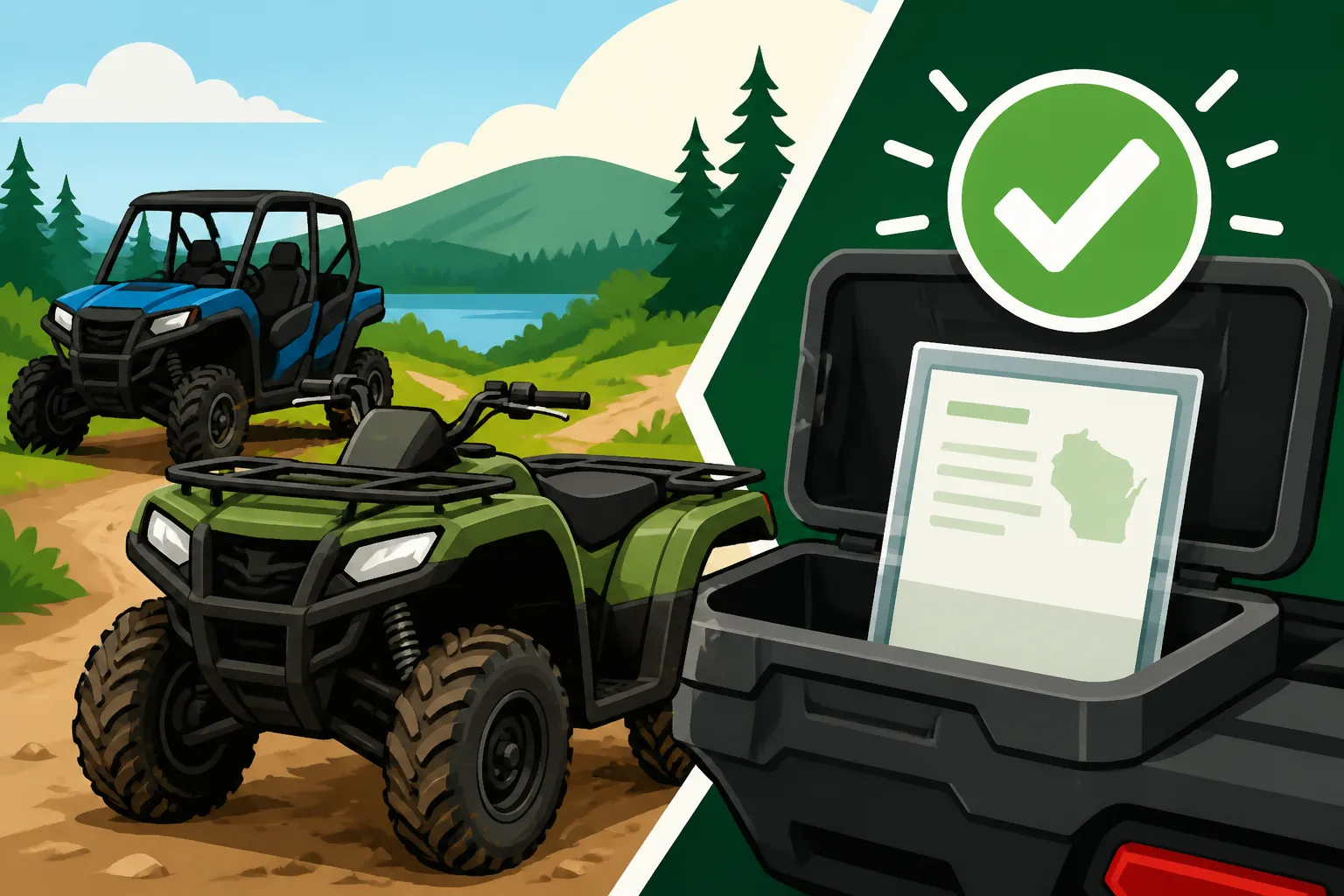
The Northwoods trails are beautiful, but they're also notorious for dust, mud, water crossings, and sudden downpours. Stashing your paper registration card unprotected in a pocket or an unsealed compartment is a recipe for disaster. The best strategy is to invest in some robust protection. Laminated pouches, heavy-duty Ziploc-style bags, or small, waterproof dry bags designed for boating or camping are excellent choices. These barriers protect against moisture, mud, and general wear and tear that can quickly render a paper card unreadable.
Where you keep it on the machine also matters. A sealed glove box or a dedicated, waterproof storage compartment on your ATV or UTV is ideal. Avoid putting it in exposed areas where it might vibrate loose, get soaked by splashing water, or be battered by branches. Some riders even go so far as to make a high-quality photocopy and laminate that, keeping the original in a super-safe spot at home, but be aware that some officials might still prefer the original. Always consider direct sunlight too; prolonged exposure can fade the print, making it hard to read. A truly effective storage solution will keep your card dry, clean, and easily accessible, ensuring that when a warden asks, you can present it without fumbling through a soggy mess. For those times when the elements win and you need a replacement, remember you can always consult the DNR on [Replacing Lost Wisconsin Decals] which also applies to your registration card.
The Risk of Losing Your Card on the Trail
Losing any important document is a headache, but losing your ATV/UTV registration card while you're out on the trail can introduce a specific set of complications. Beyond the immediate inconvenience, it can leave you without legal proof of your machine's registration if you're stopped. If you're riding in a remote area and your card somehow falls out of your pocket or an insecure compartment, retracing your steps to find it is often impossible.
The primary consequence of losing your card is that it hinders your ability to quickly and effectively prove your machine is registered and that you are its rightful operator. Should a warden stop you, they will have to verify your registration through their systems, which can take time and might lead to questions or even a citation if they can't confirm it promptly. While the machine itself might still be registered, the absence of the physical card means you're not compliant with the "carry papers" rule. If you discover your card is missing, you should contact the Wisconsin DNR to request a replacement. It’s better to get a replacement immediately than to ride without it. Understanding [Wisconsin DNR ATV Registration Explained] can help you navigate these situations.
What Happens If You're Stopped Without Your Registration Card?
No one wants to be "that guy" who gets pulled over on the trail, especially if you know your paperwork isn't quite in order. While the machine might be perfectly legal and properly registered, not having the physical card with you can still land you in a bit of a pickle.
Potential Fines and Citations
Let's be clear: riding an unregistered ATV or UTV in Wisconsin is a serious offense that can lead to significant [Fines for Riding Wisconsin Unregistered]. However, being stopped without your physical registration card – even if the machine is, in fact, registered – is a slightly different scenario. It's often considered a lesser violation than outright unregistered operation, but it is still a violation of the state's regulations.
The specific outcome can sometimes depend on the discretion of the individual warden. They might issue a warning, especially if you can verbally provide enough information for them to verify your registration via their radio or mobile data terminal. However, they are well within their rights to issue a citation for failing to possess and display the required documentation. The fine might be less than for an unregistered machine, but it's still a penalty that could have been avoided. This situation highlights why it's not just about being registered, but also about being able to prove it on demand. Similarly, just having expired decals might also lead to [Wisconsin Penalties for Expired Decals], so always keep everything current and accessible.
How to Address the Situation and Prove Ownership Later
If you find yourself in the unenviable position of being stopped and cited for not having your registration card, don't panic. The key is to cooperate with the warden and, if you genuinely believe your machine is registered, explain that you have proof at home. Most citations will include instructions on how to address the issue, which usually involves providing proof of valid registration to the court or the issuing agency by a certain deadline.
You'll typically need to present the actual, valid registration card or a printed confirmation from the DNR’s online system to demonstrate that your machine was indeed registered at the time of the stop. This often means a trip to the local DNR service center or accessing your account online. It's essential to follow through with this step, as failing to provide the proof could result in the fine being upheld or even increased. In some cases, if you've recently purchased the machine, a detailed bill of sale might serve as interim proof, especially if you're within the ten-day transfer window. For this, a well-drafted document, perhaps one you can create through a service like LawDepot, outlining the sale specifics, date, and previous owner's information, can be helpful. While Wisconsin doesn't title ATVs and UTVs, maintaining clear records is crucial for [Proof of Ownership Without a Title]. Always make sure your paperwork is impeccable; even a standard [What a Wisconsin ATV Bill of Sale Should Carry] is a must-have.
Beyond the Card: Other Documents a Wisconsin Rider Should Carry
While the registration card is paramount, it's not the only piece of paper (or digital information) you might want to have with you when you hit the trails. Depending on your age, where you're riding, and what local ordinances apply, you might need a few more items to ensure a hassle-free and compliant ride.
Proof of Insurance and Safety Education
Wisconsin has specific requirements regarding ATV/UTV insurance and safety education, especially for younger riders or those operating on certain types of public lands or designated road routes. While insurance isn't universally mandated for all ATV/UTV operation in Wisconsin, many municipalities that open their roads to ATVs and UTVs do require proof of insurance. If you're planning to ride on such routes, you'll need to carry your insurance card or declaration page, just like you would in a car. It proves you have the necessary liability coverage. For comprehensive details, check out [Insuring an ATV in Wisconsin].
Additionally, Wisconsin has a robust ATV safety certification program. Riders born on or after January 1, 1988, must complete an ATV safety course to operate on public trails. Even if you don't fall into this age bracket, it's a smart move for anyone to take the course for safety reasons. If you are required to have a safety certificate, you should carry proof of completion, whether it's a physical card or a readily accessible digital record. This is especially true for younger riders, who also have age-specific rules for operating different machine types. Understanding [Wisconsin's ATV Safety Certificate Requirement] is key. Carrying these documents ensures that you're not just registered, but also properly prepared and legally qualified for the conditions you're riding in.
Identification and Emergency Information
Beyond the specific ATV/UTV documents, carrying personal identification is just good common sense, regardless of what you’re riding. A driver’s license or state-issued ID card can confirm your identity if required by law enforcement or in the unfortunate event of an accident. It's also a crucial piece of information if you need medical attention.
Furthermore, it's highly recommended to carry emergency contact information, especially if you often ride alone or in remote areas where cell service might be spotty. A laminated card with names, phone numbers, and any critical medical information (allergies, conditions, medications) can be invaluable to first responders. Some riders even use medical ID bracelets or store this information on their phone's lock screen. While it's not legally required to carry, this information can be a lifesaver in an emergency. Preparing for a ride involves more than just fueling up; it's also about having the right papers for both your machine and yourself. It's truly a part of the bigger question, [Do You Carry Papers on a Wisconsin Trail?].
| Document Type | Purpose | Best Storage Method | Legal Requirement in WI (Generally) |
|---|---|---|---|
| ATV/UTV Registration Card | Proof of valid state registration for your machine. | Waterproof pouch in sealed compartment/glove box | Yes |
| Proof of Insurance | Demonstrates liability coverage (if riding on municipal routes). | Waterproof pouch with registration card | Yes (on certain routes) |
| ATV Safety Certificate | Required for operators born on or after Jan. 1, 1988. | Laminated card in wallet or machine storage | Yes (age/birthdate dependent) |
| Driver's License/State ID | Personal identification; required if operating on public roads. | Wallet or secure, easily accessible pocket | Yes (on public roads/routes) |
| Emergency Contact Info | Vital in case of accident or medical emergency. | Laminated card, phone lock screen, medical ID | No (Highly Recommended) |
| Bill of Sale (Recent) | Interim proof of ownership for newly purchased machines. | Waterproof pouch in machine storage | No (Helpful for transfers) |
Disclaimer
This article is for general informational purposes only and does not constitute professional advice. Laws, prices and regulations vary by location and change over time. Consult a qualified professional for guidance on your specific situation.