Handing a Quad Down a Generation
The moment you think about passing down your trusty quad or powerful side-by-side to a loved one, a mix of emotions can come flooding in. There's the warmth of sharing a passion, the pride of seeing family carry on a tradition, but also, let's be honest, a knot of confusion about all the paperwork. You might be wondering, "Do I just hand over the keys and registration, or is there more to it?" Or perhaps you're on the receiving end, inheriting a beloved machine and needing to make it legally yours. This guide is here to untangle the Wisconsin Department of Natural Resources (DNR) rules and navigate the process of officially handing a quad down a generation, whether by gift or inheritance, ensuring your family's off-road adventures continue smoothly and legally.
The Heart-to-Heart: Gifting a Machine to a Family Member
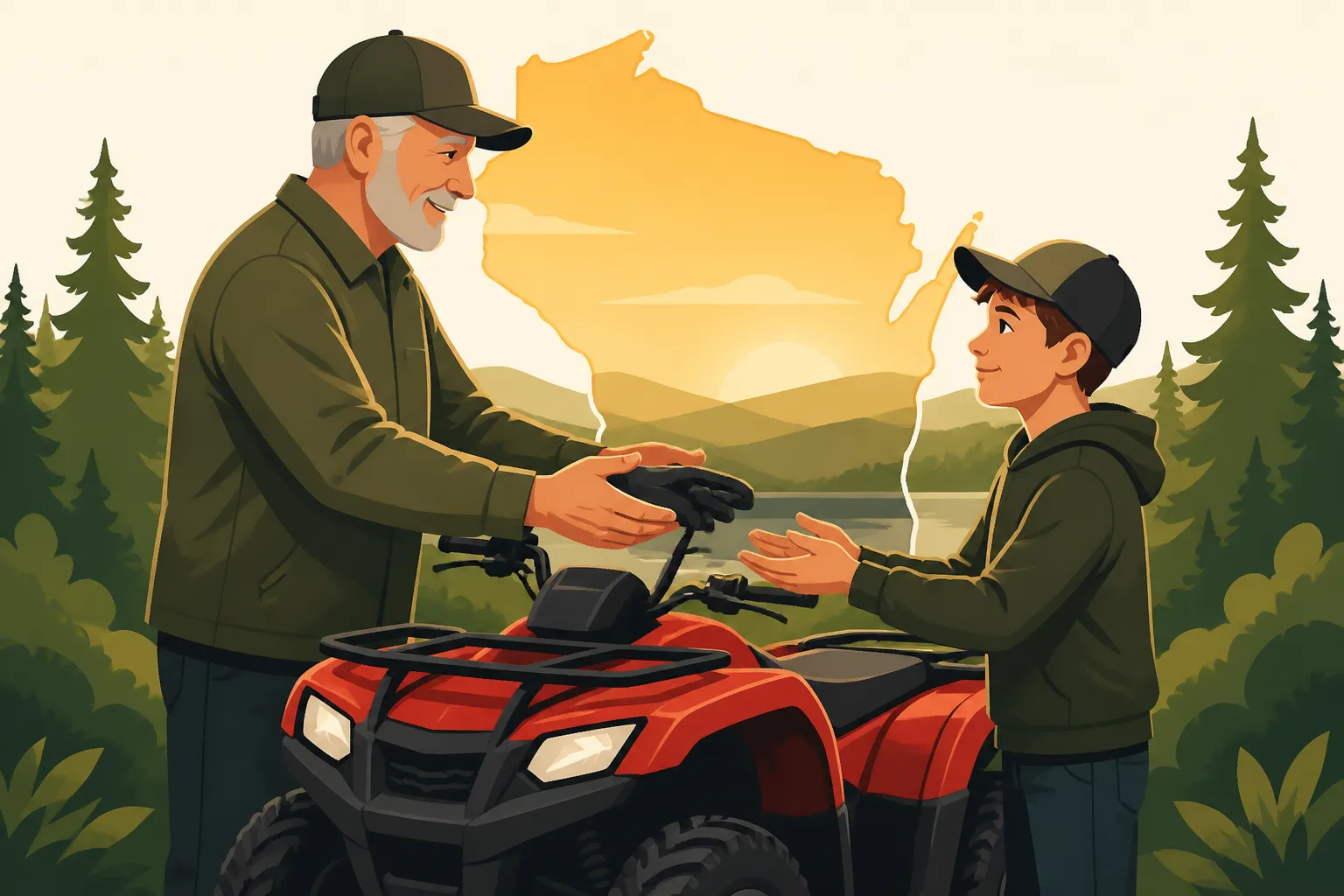
Gifting an ATV or UTV to a family member in Wisconsin can be a truly special gesture, a way to share the joy of hitting the trails or working the land together. However, even with the best intentions, you can't just slap a bow on it and call it a day. The state still needs a clear record of who owns what.
Gifting to an Adult Child or Grandchild
When you're passing your machine to an adult child or grandchild, the process is quite similar to a regular sale, but with some key differences, especially concerning the exchange of money. You'll still need to formally transfer ownership. This means completing a transfer of registration through the Wisconsin DNR. The most important piece of documentation you'll need is the existing registration card, signed by you, the current owner, and the new owner.
Even though no money is changing hands, it's highly recommended to create a simple bill of sale that clearly states the machine is a gift, with a purchase price of $0. This isn't just a formality; it's vital for a few reasons. First, it provides clear proof for the DNR that ownership has been transferred. Second, it helps clarify that no sales tax is due on the transaction because nothing was sold. Think of it as crossing your T's and dotting your I's. It saves headaches later. When it comes to sales tax, Wisconsin typically charges 5% state sales tax on ATV purchases, but a true gift, with no money exchanged, is generally exempt. Always document it clearly. [Wisconsin Sales Tax on an ATV Purchase] delves deeper into these tax considerations.
The emotional value of passing down a machine often outweighs any monetary value. It's about sharing experiences, teaching responsibility, and ensuring the machine continues its legacy. Make sure to talk through the responsibilities of ownership – maintenance, safety, and understanding the rules of the trail.
Passing the Throttle to a Minor
This is where things get a bit more complex, and understandably so, as the safety of young riders is paramount. If you're gifting an ATV or UTV to a minor (someone under 18 in Wisconsin), you can't register it solely in their name if they're too young to operate it independently or if you want to maintain some level of control. Typically, the machine should be registered in the name of a parent or legal guardian. This adult then becomes the registered owner responsible for the machine, even if the minor is the primary user.
Wisconsin has strict age restrictions for ATV and UTV operation. For example, a child must be at least 12 years old to operate an ATV and 16 years old to operate a UTV. Furthermore, anyone born on or after January 1, 1988, needs to complete an ATV or UTV safety certification course to legally operate on public trails. [Wisconsin's ATV Safety Certificate Requirement] and [Wisconsin Age Rules for ATVs and UTVs] provide all the details you’ll need to ensure your young rider is compliant.
It's not just about the paperwork; it's about ensuring safety. Before even thinking about a gift, ensure the minor has the necessary safety training and that the machine is appropriately sized for their age and skill level. Adult supervision is often required for younger riders on public lands, so this isn't a gift that comes without ongoing family involvement.
Crafting a Clear Gift Agreement
Even within families, misunderstandings can happen. That's why having a written record, even for a gift, is crucial. A formal gift agreement or a detailed bill of sale stating "$0 consideration" helps prevent future questions from the DNR, insurance companies, or even other family members. This document should include:
- The full names and addresses of both the giver and the recipient.
- A clear statement that the machine is being given as a gift.
- The date of the transfer.
- A complete description of the ATV or UTV, including make, model, year, and crucially, its Vehicle Identification Number (VIN). The VIN is like the machine's social security number; it uniquely identifies it.
- Signatures of both parties.
Using a template can simplify this process. Services like LawDepot offer customizable legal document templates, including bills of sale, that you can adapt to specifically state a gift transfer. This ensures all the necessary legal language is present, giving you peace of mind. While it might feel overly formal for a family transaction, it's a small step that provides significant protection and clarity.
When Life Changes: Transferring an ATV After a Death
The loss of a loved one is an incredibly difficult time, and navigating legal processes like transferring ownership of an ATV can add to the stress. Wisconsin has specific procedures for handling assets like ATVs and UTVs when their owner passes away. The goal is to ensure the machine legally transfers to the rightful heir or beneficiary as smoothly as possible.
Understanding Wisconsin's Inheritance Process
When an ATV owner passes away, how the machine is transferred depends on several factors: whether there's a will, the value of the estate, and if the machine was jointly owned. If the deceased had a will, it should specify who inherits the ATV. This is typically handled through the probate process, where the will is validated, and an executor is appointed to distribute assets. If there's no will, state intestacy laws dictate who inherits, usually starting with a spouse and then children.
For smaller estates, Wisconsin allows for a simplified process, sometimes called a "Small Estate Affidavit," to transfer property without full probate. This can be a godsend when you're just dealing with a few assets like an ATV. However, the specific rules and value thresholds for using such an affidavit can vary, so it's always best to check current Wisconsin statutes or consult an estate attorney. [Inheriting an ATV in Wisconsin] offers a more detailed look at these initial steps.
If the ATV was registered in two names, such as "John Doe OR Jane Doe," it often bypasses probate and transfers directly to the surviving owner. However, if it was "John Doe AND Jane Doe," the deceased's share might still need to go through probate. It's a subtle but important distinction that can significantly impact the complexity of the transfer. [A Wisconsin Registration in Two Names] explores the implications of joint ownership.
The Paperwork for an Inherited Machine
Once the legal right to the ATV has been established (whether through a will, intestacy laws, or a small estate affidavit), the next step is to actually transfer the DNR registration. This requires a few key documents:
- Proof of Death: A certified copy of the death certificate is always needed.
- Proof of Right to Inherit:
- With a Will: You'll need "Letters Testamentary" or "Letters of Administration" issued by the probate court, which confirm the executor's authority to act on behalf of the estate. The executor will then sign the registration transfer paperwork.
- Without a Will: You might need a court order naming an administrator or, in smaller estates, a properly executed Small Estate Affidavit.
- Joint Ownership: If the machine was titled "OR" (e.g., John Doe OR Jane Doe), the surviving owner typically only needs the death certificate and the original signed registration card to transfer it into their sole name.
The person legally authorized to handle the estate (executor or administrator) will need to complete and sign the Wisconsin ATV/UTV registration application, along with the existing registration card. They will indicate on the application that the machine is being transferred due to inheritance. The DNR will process this, and a new registration card will be issued to the new owner. It’s important to act within the typical ten-day transfer deadline in Wisconsin, even for inherited machines, to avoid any potential delays or questions. [Transferring a Wisconsin Registration Within Ten Days] covers this important timeline. [Wisconsin Estate Paperwork for a Machine] offers further insights into the specific documentation needed in these sensitive situations.
Handling Sales Tax for an Inherited Transfer
A significant relief when inheriting an ATV is that sales tax is typically not applicable. Since the machine is transferred due to the death of the owner and not through a traditional sale where money is exchanged, it falls outside the scope of sales tax.
However, you still need to clearly document this for the DNR. The registration application will usually have a section where you can indicate the reason for the transfer (e.g., "inheritance"). Attaching copies of the death certificate and the probate court documents (Letters Testamentary, Small Estate Affidavit, etc.) serves as the necessary proof that no sales transaction occurred and therefore no sales tax is due. This is one less financial burden during an already challenging time.
Planning Ahead: Estate Considerations for Your ATV
Thinking about what happens to your ATV or UTV after you're gone isn't the most cheerful topic, but it's incredibly responsible. Proactive estate planning can save your family a lot of grief and expense, ensuring your machine goes to the person you intend, without unnecessary delays or legal battles.
Including Your Quad in Your Estate Plan
Your ATV or UTV is an asset, and like any other significant asset, it should be explicitly mentioned in your estate plan. Here are a couple of ways to do this:
- In Your Will: The simplest method is to include a specific bequest in your will, stating exactly who should inherit your ATV. For example, "I give my Polaris Ranger, VIN [insert VIN], to my grandson, Alex Smith." This leaves no room for doubt.
- Through a Trust: For more complex estates or to avoid probate entirely, you could place your ATV into a revocable living trust. If the trust owns the ATV, the trust document would specify the beneficiary, and the transfer happens outside of the probate court process. This can be particularly useful if you own multiple machines or have specific conditions for their transfer.
Another consideration is joint ownership. While often used by married couples, holding the registration in two names with "OR" (e.g., "John Doe OR Jane Doe") means the surviving owner automatically takes full ownership upon the death of the other, bypassing probate for that specific asset. This simplifies matters immensely for the surviving individual. However, be cautious with whom you choose as a joint owner, as they would have equal rights to the machine during your lifetime.
Keeping Records Accessible
No matter how meticulously you've planned, your family won't be able to execute your wishes if they can't find the necessary paperwork. This is perhaps one of the most overlooked, yet critical, aspects of estate planning for vehicles.
Create a binder or a secure digital file that contains:
- Current Wisconsin DNR registration card: This is the most important document for transferring ownership.
- Proof of ownership: Even though Wisconsin doesn't title ATVs, any original purchase receipts or past registration documents can be helpful in establishing a chain of ownership if the current card is lost or damaged. [Proof of Ownership Without a Title] explores alternatives to a traditional title.
- The VIN: Make sure the VIN is clearly recorded in multiple places.
- Service records and owner's manuals: These show you maintained the machine, which can be important for its value and for the new owner.
- Insurance policy details: The new owner will need to arrange their own insurance.
- Your will or trust documents: Clearly mark where the ATV is mentioned.
Make sure your executor or trusted family member knows exactly where these documents are located. A safe deposit box is secure, but ensure the designated person has access. Digital copies stored securely in the cloud (with clear access instructions) can also be invaluable, but physical originals are usually required for official transfers.
Discussing Your Wishes Openly
This might be the hardest part, but it's arguably the most important: talk to your family about your wishes. Openly discussing who you intend to leave your ATV to can prevent disputes and hurt feelings down the line.
Perhaps one child has always loved riding with you, while another has no interest. Maybe a grandchild has shown a real passion for the outdoors and would genuinely cherish the machine. These conversations ensure the machine goes to someone who will appreciate it, use it responsibly, and continue its legacy. It also allows you to share any specific instructions for its care or use, like "take it up north to the cabin every fall," or "make sure the grandkids get their safety course done before they ride it."
This transparency, while sometimes uncomfortable, reinforces family bonds and avoids the heartache of an asset being distributed against your true intent, simply because no one knew.
Registration Realities: What the DNR Needs From You
Once the gifting or inheritance details are sorted, the rubber meets the road with the Wisconsin DNR. This is the practical step where you formally notify the state of the ownership change. Ignoring this step can lead to penalties for an unregistered ATV, or worse, legal headaches if the machine is involved in an incident. [Penalties for an Unregistered ATV in Wisconsin] highlights the importance of timely registration.
The Transfer Process at a Glance
Whether it’s a gift or an inheritance, the core process for transferring a Wisconsin ATV/UTV registration is fairly standard:
- Gather Documents:
- The original Wisconsin ATV/UTV registration card, signed by the previous owner (or executor/administrator in the case of inheritance).
- A completed Wisconsin ATV/UTV Registration Application (Form 9400-366).
- Proof of transfer:
- For a gift: A bill of sale showing $0 consideration, or a gift agreement.
- For inheritance: A death certificate and relevant probate documents (Letters Testamentary, Small Estate Affidavit, etc.).
- A small transfer fee. Wisconsin typically charges a $5 transfer fee when ownership changes. [The $5 Wisconsin Transfer Fee] provides details on this specific cost.
- Complete the Application: Fill out the application completely, including the new owner's information, the machine's details, and clearly indicating the reason for the transfer (gift or inheritance).
- Submit to the DNR: You can submit the paperwork either by mail to the Wisconsin DNR registration section or, more quickly, through an authorized DNR registration agent. These agents are typically powersports dealerships or municipal clerks and can process the transfer on the spot, issuing a temporary registration. [Wisconsin Registration Agents and Where They Are] helps you locate an agent near you.
The DNR typically expects this transfer to happen within ten days of the change in ownership. Missing this window can lead to minor complications, but it's not insurmountable. [Missing the Ten-Day Wisconsin Transfer Window] explains what to do if you're a bit late.
When the Original Registration Card is Missing
Life happens. Sometimes, the original registration card gets lost, damaged, or simply can't be found, especially in the emotional aftermath of an inheritance. Don't panic; this doesn't mean you can't transfer ownership, but it does add an extra step.
If the original registration card is missing, the DNR will typically accept an Affidavit of Lost Registration. This is a sworn statement, often requiring notarization, attesting that the original card is lost and confirming your legal right to transfer or claim ownership of the machine. Along with this affidavit, you'll still need other proof of ownership, such as a bill of sale (if you originally bought it) or the relevant inheritance documents. The VIN is paramount here, as it's how the DNR tracks the machine's history. [Transferring When the Seller Lost the Card] provides specific guidance on navigating this situation.
It's a testament to the DNR's understanding of real-world scenarios that they have processes for these situations. While it might take a little longer and require more documentation, a lost registration card isn't a dead end.
Public vs. Private Use Considerations for the New Owner
As you hand down the machine, it's a perfect opportunity to educate the new owner about Wisconsin's two main types of ATV/UTV registration: public use and private use.
- Public Use Registration: This is what most riders get, as it allows operation on Wisconsin's extensive public trail systems, designated routes, and frozen waterways. It comes with an annual expiration date (March 31st) and requires periodic renewal. [Wisconsin's Public Use ATV Registration] details these requirements.
- Private Use Registration: This type of registration is specifically for machines that will only be operated on private property owned by the registrant. It has a one-time fee and never expires, but the machine can never legally touch public land. [Wisconsin's Private Use ATV Registration] clarifies its limited scope.
Ensure the recipient understands the implications of each, especially if they plan to ride on trails. Many new riders, particularly younger ones, might assume all registration is the same. Clearly explaining [Public Use Versus Private Use in Wisconsin] can prevent accidental violations and ensure they register their newly acquired machine correctly for their intended use. After all, the joy of passing down a quad is knowing it will be enjoyed safely and legally for years to come.
Disclaimer
This article is for general informational purposes only and does not constitute professional advice. Laws, prices and regulations vary by location and change over time. Consult a qualified professional for guidance on your specific situation.