Registering an ATV in Wisconsin
Alright, fellow Wisconsin riders, let's talk about something that can feel as tangled as a poorly maintained trail: registering your ATV or UTV in the Badger State. It's a common source of head-scratching, especially since we don't have titles for these machines like we do for cars. But don't you worry, this comprehensive guide is here to untangle all the knots, walk you through the process step-by-step, and make sure you're riding legally and confidently.
Why Registering Your ATV or UTV in Wisconsin Is Non-Negotiable
I get it. After shelling out good money for your machine, the last thing you want to think about is more paperwork and fees. But trust me, registering your ATV or UTV in Wisconsin isn't just a bureaucratic hurdle; it's a critical step that protects you, contributes to our incredible trail system, and ultimately ensures you can enjoy your ride without looking over your shoulder.
The Legal Imperative: Avoiding Fines and Headaches
Let's face it, nobody wants a run-in with a conservation warden, especially when you're out trying to relax and enjoy the Northwoods. Riding an unregistered ATV or UTV on public lands, designated trails, or even on routes opened by local municipalities is a surefire way to invite a citation. The penalties for an unregistered machine can really put a damper on your day, often involving fines that far outweigh the cost of registration itself. It's not a slap on the wrist; it's a real hit to your wallet.
Imagine you're cruising along a beautiful county forest trail up near Eagle River, the leaves are turning, and the air is crisp. You round a bend, and there's a warden at a checkpoint. They're checking registrations, safety certificates, and making sure everyone's playing by the rules. If your machine isn't properly registered, that peaceful ride can quickly turn into a frustrating and expensive experience. Even if you're just crossing a town road on a designated route, that machine needs to be street-legal in the ATV sense.
Some folks mistakenly believe that if their machine is only used for hunting on public land, or for ice fishing on a frozen lake, that it's exempt. That's a myth that can get you into trouble. Any operation on public access lands—be it trails, routes, frozen lakes, or even certain public easements—requires a valid registration. Don't let a simple oversight turn your recreational escape into a legal hassle.
Beyond the Law: Funding Trails and Ensuring Safety
While avoiding fines is a powerful motivator, there's a bigger, more positive reason to register your machine: you're directly contributing to the fantastic trail system we all enjoy here in Wisconsin. A portion of every registration fee goes into the state's ATV and UTV trail aids program, which helps counties and local clubs maintain existing trails, develop new ones, and fund crucial infrastructure like bridges and signage. When you see a well-groomed trail or a new staging area, you're looking at the direct result of those registration dollars at work.
Think about the thousands of miles of trails we have, from the sandy stretches of Black River State Forest to the vast networks in Marinette and Bayfield counties. These trails don't maintain themselves. They require constant grooming, brush clearing, culvert repair, and signage updates. Your registration fee helps make all of that possible, ensuring that future generations of riders, including your own kids or grandkids, can continue to explore Wisconsin's natural beauty on their machines. It's about being part of the community and supporting the sport we all love. You can learn more about how these funds are used by looking into [Wisconsin Trail Aids and Registration Revenue].
Beyond funding, registration plays a vital role in safety and accountability. In the unfortunate event of an accident or theft, having your machine properly registered provides a clear record of ownership and identification. If your quad goes missing from your deer camp, that registration number is critical for law enforcement to track it down. It ties your machine to you, making it easier to recover if it's stolen and ensuring that responsible parties can be identified in an incident. It's not just about compliance; it's about being a responsible member of the Wisconsin riding community.
Public Use Versus Private Use: Deciphering Wisconsin's Two-Tiered System
This is where a lot of riders get tripped up, and it's a really important distinction in Wisconsin. Unlike some other states, we have two primary types of ATV and UTV registration: Public Use and Private Use. Choosing the right one is critical because it dictates where and how you can legally ride your machine. Getting it wrong can lead to fines, even if you technically have a valid registration, just the wrong kind.
What "Public Use" Really Means for Your Ride
The "Public Use" registration is what most recreational riders will need. This registration allows you to operate your ATV or UTV on any designated public ATV/UTV trails, established road routes, and public access frozen waterways (like those popular ice fishing spots on our northern lakes). Essentially, if you plan on leaving your private property and venturing onto any land managed by the state, county, or local municipality for public recreational riding, you need a Public Use registration.
This is the registration for the weekend adventurer, the deer hunter using a trail to access their stand, or the ice fisher who rides their UTV out to their shanty. It's the standard for anyone who wants to take advantage of Wisconsin's incredible network of public riding opportunities. This registration allows you the freedom to explore almost anywhere legally open to ATV and UTV traffic in the state. If you want to understand more about where you can ride with this, check out [What Public Registration Lets You Ride].
A key characteristic of the [Wisconsin's Public Use ATV Registration] is its annual expiration. These registrations are only valid for one year and consistently expire on March 31st, regardless of when you originally registered your machine. So, if you register in July, it's still only good until the following March 31st. This rolling expiration date often catches people off guard, so it’s essential to set a reminder to renew. The March 31st expiration is a date that [Wisconsin Public Use Registrations Expire March 31] and every seasoned Wisconsin rider learns to remember.
"Private Use Only": When and Why It Applies
Now, for something completely different: the "Private Use Only" registration. This option is far more restrictive and is primarily intended for machines that never leave your own private property, or the private property of immediate family members (spouse, child, parent). This means no public trails, no town road routes, and absolutely no riding on frozen public lakes. It's truly for private property use exclusively.
If you're a farmer who uses your UTV to haul feed across your own fields, or if you only ever ride your ATV around your sprawling backyard in the countryside and occasionally mow a path for the grandkids, then this might be the registration for you. The crucial detail here is that the machine is literally confined to land that you or your immediate family own and control. Crossing even a tiny town road to get from one section of your property to another, if that road is not your private driveway, would technically require a public use registration.
The main draw of the [Wisconsin's Private Use ATV Registration] is that it's a one-time fee. This registration does not expire, which makes it appealing for those who genuinely only ride on private land. It's a "set it and forget it" kind of registration, which offers convenience if your riding habits perfectly fit the narrow definition. You can dive deeper into this specific registration type with [Private Registration That Never Expires]. Just be absolutely certain that your usage will never stray onto public access areas, or you'll find yourself regretting the choice of private use.
Choosing the Right Path: Which Registration You Actually Need
Deciding between Public Use and Private Use can feel like a trick question, but it boils down to your riding intentions. Ask yourself: "Will I ever ride this machine on a public trail, a designated road route, a frozen public lake, or any land not exclusively owned by me or my immediate family?" If the answer is "yes," even a hesitant "maybe someday," then you almost certainly need a Public Use registration. The flexibility it offers is worth the annual renewal.
Here's a quick decision-making guide:
- Public Use: Planning to hit the county trails up north? Going ice fishing on Lake Winnebago? Using it to access your deer stand on county forest land? Riding it on a town's ATV route to get to a local restaurant? You need Public Use.
- Private Use: Only ever riding on your own 40 acres, never leaving the boundaries? Using it solely to plow your driveway or haul firewood from your own woodlot? Private Use might be enough.
It's better to err on the side of caution and get the Public Use registration if there's even a slight chance your riding will extend beyond private property. The cost difference isn't so significant that it's worth the risk of a fine, and the peace of mind knowing you're fully legal wherever you go is invaluable. Plus, remember, your Public Use registration also covers you on private land, provided you have permission. You're not losing any capabilities by choosing the public option; you're only gaining. It's crucial to understand [Which Wisconsin Registration You Actually Need] to avoid issues.
Navigating the Registration Process: Your Step-by-Step Guide
Once you've figured out which registration you need, the next step is actually getting it done. The process itself is fairly straightforward, but like all bureaucratic endeavors, it requires a bit of preparation. Having everything in order before you start will save you time and frustration. Let's break down exactly what you'll need and how to get it submitted.
Gathering Your Documents: What You'll Need Before You Start
Before you even think about clicking "submit" or walking into a DNR agent's office, you'll need to gather some essential paperwork. This is where most people get held up, so taking a few minutes to organize everything beforehand will make the rest of the process much smoother.
First and foremost, you'll need proof of ownership. If you bought your ATV or UTV new from a dealer, this will typically be a manufacturer's statement of origin (MSO) or a bill of sale from the dealer. If you bought it used, a signed bill of sale from the previous owner is paramount. Remember, Wisconsin doesn't title ATVs, so this bill of sale is your primary proof. Make sure it includes the seller's and buyer's full names and addresses, the date of sale, the purchase price, and a complete description of the machine, including the Vehicle Identification Number (VIN). A clear, concise bill of sale is essential. For private sales, using a standardized template from a service like LawDepot can ensure all necessary information is included and legally sound.
Next, you'll need to consider sales tax. If you purchased your machine from a licensed Wisconsin dealer, they typically collect and remit the sales tax on your behalf at the time of purchase. However, if you bought it in a private sale, you are responsible for paying the Wisconsin sales tax directly to the DNR when you register. You'll need to know the purchase price for this calculation. More on sales tax later, but be prepared to either show proof it was paid or pay it during registration. Check [Wisconsin Sales Tax on an ATV Purchase] for more details.
You'll also need your personal identification (like a driver's license or state ID) and, of course, the Vehicle Identification Number (VIN) of your ATV or UTV. The VIN is a unique 17-digit code that identifies your specific machine. It's usually stamped on the frame in an easily accessible location, often near the front left wheel well or under the seat. Double-check that you have the correct VIN, as a single digit error can cause significant delays in your registration. Gathering all these items before you start is key to a smooth registration process. If you bought a used machine, ensuring you have the proper paperwork is covered in [Buying a Used ATV in Wisconsin: The Paperwork].
Registering Online Through the Wisconsin DNR
For many riders, the easiest and most convenient way to register your ATV or UTV is online through the Wisconsin Department of Natural Resources (DNR) website. The online portal is generally user-friendly and guides you through the necessary steps. You can register a new machine, transfer an existing registration, or renew an expired one.
Once you navigate to the DNR's Go Wild licensing and registration system, you'll typically select the option for "Register an ATV/UTV." You'll then be prompted to input information about your machine, including its make, model, year, and the all-important VIN. You'll also provide your personal contact information. The system will ask about the type of registration you need (Public Use or Private Use) and calculate the appropriate fees.
You'll pay the registration fee and any applicable sales tax (if you're registering a privately purchased used machine) directly through the online system using a credit or debit card. Once your transaction is complete, you'll usually receive an immediate confirmation number. The DNR will then process your request and mail your physical registration card and decals to you. This can take a week or two, so don't expect them to arrive overnight. For a detailed walkthrough, you can consult [Registering Through the Wisconsin DNR Website].
Using a Wisconsin Registration Agent
If you prefer to handle things in person, or if you need your registration processed more quickly than mail allows, you can visit one of the many authorized DNR registration agents located throughout the state. These agents are typically sporting goods stores, bait shops, or other businesses that are licensed to process hunting, fishing, and recreation registrations. The benefit of using an agent is that you often walk out with a temporary registration printout on the spot, allowing you to ride legally while you wait for your official decals and card to arrive in the mail.
When you visit a registration agent, make sure to bring all the documents we discussed earlier: your proof of ownership (bill of sale), your personal ID, and the VIN. The agent will input your information into the DNR system, collect the appropriate fees (including a small service fee for their trouble), and issue you a temporary paper registration. This temporary document serves as your proof of registration until your official card and decals arrive from the DNR.
Many riders, especially those in more rural areas or near popular trailheads, appreciate the convenience of these local agents. They can be a lifesaver if you realize your registration is expired just before heading out for a weekend ride. To find an agent near you, the DNR website usually provides a searchable map or list. Check out [Wisconsin Registration Agents and Where They Are] for more help locating one, and remember what [Documents a Wisconsin Agent Wants] to bring with you. It’s always a good idea to call ahead to confirm their hours and that they process ATV/UTV registrations.
Special Circumstances: Handling Unique Registration Scenarios
While the basic registration process is fairly standard, life isn't always so simple. You might buy a used machine, move to Wisconsin from another state, or even lose your decals. These special circumstances can throw a wrench into the works if you're not prepared. Let's tackle some of the more common unique situations you might encounter.
Buying a Used Machine: Transferring Ownership Seamlessly
Buying a used ATV or UTV can be a great way to get into the sport, but the paperwork aspect often causes confusion, especially without a title. In Wisconsin, when you buy a used machine, you have a critical deadline: you must transfer the registration into your name within ten days of the purchase date. Missing this deadline can lead to complications and potential fines. This is a hard-and-fast rule, and it's something every buyer needs to be aware of.
The previous owner (the seller) has a responsibility to provide you with certain documents. Ideally, they should give you their current, valid registration card, signed over to you in the designated transfer section. They should also provide you with a signed bill of sale that includes the machine's VIN, the purchase price, and the date of sale. This bill of sale is particularly important for proving ownership and calculating sales tax. For a detailed guide on what paperwork to expect, refer to [What a Wisconsin ATV Seller Must Give the Buyer]. Using a robust bill of sale, perhaps generated through a service like LawDepot, can protect both buyer and seller in a private transaction.
But what happens if the seller lost their registration card? It's a common problem, and it can make the transfer a bit trickier, but it's not impossible. If the seller doesn't have the physical card, they can often provide you with a written statement of sale that includes all the necessary information, along with proof of their previous registration (like a copy of an old card or their DNR customer number). You, as the buyer, would then submit this information to the DNR. While it might take a bit more explanation, the DNR can usually process the transfer based on this alternative proof of ownership. Find more guidance on this specific challenge in [Transferring When the Seller Lost the Card]. This ten-day window for transfer is crucial; learn more at [Transferring a Wisconsin Registration Within Ten Days].
Out-of-State Machines and New Wisconsin Residents
If you're new to Wisconsin and bringing your ATV or UTV with you, welcome! But you'll need to get it registered here if you plan to ride it. Wisconsin law generally requires machines kept in the state for more than 15 consecutive days to be registered with the DNR, even if they're still registered in your previous home state. This ensures that you're contributing to the local trail system and complying with state laws. The process is similar to registering a new-to-you used machine, requiring proof of ownership and payment of Wisconsin sales tax if it hasn't been paid here or given credit for elsewhere. You can learn more about this by checking [Moving to Wisconsin With an Out-of-State Quad].
What about sales tax credit? If you've already paid sales tax on your machine in another state, Wisconsin generally offers a credit for that tax, provided it was a reciprocal state (most are). You'll need to provide proof of the sales tax paid in the other state when you register. This avoids you having to pay sales tax twice on the same machine. This can be a real relief for new residents. Delve into the specifics with [Credit for Tax Paid to Another State].
For visitors, the rules are different. If you're just visiting Wisconsin for a short period (typically less than 15 days, though it's always wise to check current regulations), and your machine is legally registered in your home state, you generally don't need a Wisconsin registration or trail pass. However, if you plan on spending more extended time riding here, or if your home state's registration is lacking, it might be worth considering a non-resident trail pass, or even a Wisconsin registration, depending on your plans. When considering [Wisconsin Registration for an Out-of-State Machine], it is always important to remember the distinctions.
Lost Decals, Correcting Errors, and Other Uncommon Issues
Sometimes, things just go wrong. Decals can peel off in the cold Wisconsin winter or get scraped off during a muddy ride. Or perhaps you notice a typo in your VIN on the registration card. Don't panic; these issues are fixable.
If your registration decals disappear or become unreadable, you can order replacement decals through the DNR. There's usually a small fee, and you'll typically need to provide your registration number and confirm your mailing address. It's important to get those replacements quickly, as riding without clearly displayed decals is still a violation. Learn more about getting these sorted with [Replacing Lost Wisconsin Decals]. Sometimes, the weather is just too much, and your [Decals That Came Off in the Cold] need a fresh start.
Mistakes on your registration card, such as an incorrect VIN or an address typo, can also be corrected. You'll typically need to contact the DNR directly, either online or by phone, to explain the error and provide documentation to support the correction. They'll guide you through the process, which often involves sending in your current card and receiving a corrected one. It's always best to rectify these errors sooner rather than later to avoid any issues if you're ever stopped by a warden. For specific guidance on rectifying these errors, see [Correcting a VIN on a Wisconsin Record].
What if you've got an old machine that seems to have no registration history in Wisconsin? Perhaps it's been sitting in a barn for decades, or you bought it from someone who never registered it. While it might seem daunting, it's usually possible to register these machines. You'll need robust proof of ownership, like a detailed bill of sale or even a notarized statement if previous records are scarce. The DNR will guide you on what specific documentation they'll accept to establish ownership and get your machine onto the registration rolls. This can be a bit more involved, but it's a path for [Buying a Machine With No Registration History].
Fees, Expirations, and Renewals: Keeping Your Registration Current
Understanding the financial side of ATV and UTV registration in Wisconsin, along with the critical dates for renewals, is essential for every rider. Nobody wants to be caught off guard by an expired registration or unexpected fees. Let's break down the costs and timelines to keep your machine legal and ready to ride.
Understanding the Costs: Public and Private Use Fees
The cost of registering your ATV or UTV in Wisconsin depends on whether you opt for Public Use or Private Use registration, as well as if it's a new registration or a transfer.
For a Public Use registration, which is the annual registration most riders choose, there's a specific fee set by the DNR. This fee contributes directly to the maintenance and development of our state's vast trail system. It's a yearly investment in the sport you love. The exact amount can change, so it's always best to check the current figures on the Wisconsin DNR website. However, you can learn more about it generally through [Wisconsin ATV Registration Fee for Public Use].
The Private Use registration, on the other hand, involves a different fee structure. Since this registration never expires, it's a one-time fee that's typically lower than the annual public use fee, making it an attractive option for those who strictly adhere to private land use. Again, for the most up-to-date figures, consult the DNR. For a deeper dive into this cost, refer to [Wisconsin Private Use Registration Fee].
Beyond the initial registration fees, there's also a transfer fee to consider when you buy a used machine. This small, flat fee is charged when you transfer an existing registration from one owner to another. It's typically added to your registration cost during the transfer process. This nominal fee helps cover the administrative costs of updating the ownership records. The specific amount can be found by consulting [The $5 Wisconsin Transfer Fee]. Always check the Wisconsin DNR website for the most current fee schedules before you begin your registration process, as these amounts can occasionally be adjusted.
The Annual Public Use Expiration and What to Do
This is arguably the most important date for Public Use ATV and UTV riders in Wisconsin: all Public Use registrations expire annually on March 31st. It doesn't matter if you registered your brand-new machine in August or renewed an old one in January; that registration will always expire on March 31st of the following year (or the same year if you registered after March 31st for the current year). This fixed expiration date is designed to simplify the renewal process for the DNR but often catches riders off guard if they don't mark their calendars.
Why is it so important to renew on time? Riding with an expired registration is just as illegal as riding without one at all. If you're out on the trails on April 1st with a registration that expired the day before, you're subject to the same penalties and fines as someone who never registered their machine. This can quickly turn a fun spring ride into a costly lesson. Many wardens are particularly vigilant in early spring when trails are opening up and riders are eager to get out after a long winter. This annual expiration is a critical piece of knowledge, and it's what [The March 31 Expiration Every Wisconsin Rider Learns] means.
To avoid any last-minute stress or the risk of riding illegally, it's highly recommended to renew your registration well before the March 31st deadline. The DNR often sends out renewal reminders closer to the expiration date, either by mail or email, which can be a helpful nudge. However, it's ultimately your responsibility to ensure your registration is current. Don't rely solely on these reminders; set your own calendar alert to ensure you're covered. Being proactive about [Renewing a Wisconsin Registration in March] will save you a lot of potential headaches.
Renewing Your Wisconsin ATV Registration
Fortunately, renewing your Wisconsin ATV or UTV registration is usually a quick and painless process. The easiest method for most people is to do it online through the Wisconsin DNR's Go Wild system.
When you log in, you'll simply find the option to renew your ATV/UTV registration, enter your machine's registration number (which is on your current card), confirm your information, and pay the annual Public Use fee. The system is designed to be very intuitive, guiding you through each step. Once complete, you'll receive a confirmation, and your new registration card and decals will be mailed to you, typically arriving within a week or two. Many riders find that [Renewing a Wisconsin Registration Online] is the most efficient method.
If you prefer to renew in person, you can always visit one of the authorized DNR registration agents. They can process renewals on the spot, providing you with a temporary proof of registration immediately. This is particularly useful if you've waited until the very last minute (or even past the deadline) and need to ride soon. Just remember to bring your old registration card or at least your registration number and personal ID.
What happens if you completely miss the March 31st deadline? While it's best to avoid it, you can still renew an expired registration. You'll simply pay the standard renewal fee, and your new registration will be valid until the following March 31st. There typically isn't an additional late fee for renewing an expired registration itself, but remember, any riding done during the expired period is subject to fines. So, even if you're a bit late, get it renewed as soon as possible to ensure you're legal for future rides.
Beyond the Sticker: Proof of Ownership, Sales Tax, and Dealer Involvement
Registering your ATV or UTV is more than just getting a sticker; it involves understanding Wisconsin's unique approach to ownership proof and ensuring you've handled sales tax correctly. These details are especially crucial when buying or selling a machine, as they form the foundation of legal ownership and financial compliance.
Wisconsin's Unique "No Title" System
One of the biggest sources of confusion for ATV and UTV owners in Wisconsin is the fact that, unlike cars, trucks, or even snowmobiles, ATVs and UTVs are not titled by the state. This means you won't receive a formal Certificate of Title from the Department of Transportation when you purchase or register your machine. Many people find this surprising, especially if they're used to the clear-cut ownership proof that a title provides.
So, if there's no title, how do you prove ownership? In Wisconsin, your primary proof of ownership for an ATV or UTV is a combination of your current registration card and a bill of sale. When you buy a machine, particularly in a private sale, that bill of sale becomes an incredibly important document. It needs to clearly state the seller's and buyer's information, the date of sale, the purchase price, and the machine's full VIN. The older the machine, the more vital the bill of sale becomes, as past registration records might be less accessible. For a deep dive into this unique system, read [Why Wisconsin Does Not Title ATVs].
It cannot be overstated: always keep your bill of sale in a safe place, separate from your registration card. If you ever need to sell the machine, recover it after theft, or even just prove ownership to an insurer, that bill of sale is your golden ticket. For added security and professionalism in private sales, consider using a legally sound bill of sale template from a reputable service like LawDepot. This can help ensure all the necessary legal language and details are included, providing clear [Proof of Ownership Without a Title] for both parties.
Sales Tax: Don't Let It Catch You Off Guard
Sales tax is another area that can be a bit tricky, especially with private sales. In Wisconsin, sales tax is generally due on the purchase of an ATV or UTV, whether it's new from a dealer or used from a private seller.
The state sales tax rate is applied to the purchase price of your machine. If you buy from a licensed Wisconsin dealer, they will typically collect this tax from you at the point of sale and remit it to the state. This simplifies things for you, as it's all handled as part of the purchase transaction. You can check [Wisconsin State Sales Tax on a Quad] for more information.
However, if you buy your ATV or UTV in a private sale (from an individual, not a dealer), you, as the buyer, are responsible for paying the Wisconsin sales tax directly to the DNR when you register the machine. The DNR registration form will have a section for you to declare the purchase price, and they will calculate the sales tax due. This is why having an accurate bill of sale is so important—it substantiates the purchase price you declare.
Beyond the state sales tax, some counties in Wisconsin also impose a county sales tax. This is a smaller, additional percentage that varies by county. If you live in or register your machine in a county that has a county sales tax, you'll need to pay that as well. Again, dealers usually handle this, but for private sales, you'll pay it during the registration process. The DNR system will typically calculate both state and county sales tax based on your residence and the purchase price you report. For more on this, check out [County Sales Tax on a Wisconsin Machine]. It's crucial to understand [Proof of Sales Tax Wisconsin Requires] when registering a machine.
How Dealers Simplify (or Complicate) the Process
Buying a new or used ATV or UTV from a licensed Wisconsin dealer generally streamlines the registration and sales tax process. Most reputable dealers will handle all the initial paperwork for you. They will collect the necessary sales tax (state and county), complete the initial registration application, and submit it to the DNR on your behalf. This means you typically walk out of the dealership having paid all the required fees, and you'll simply wait for your official registration card and decals to arrive in the mail.
Dealers are usually required to file this registration paperwork within a few days of the sale, often within five days, ensuring a quick turnaround for you. This is a significant convenience for buyers, as it removes the burden of calculating taxes and submitting forms yourself. Dealers often have systems in place that integrate directly with the DNR, making the process efficient. You can get more information on this process by looking at [Wisconsin Dealers Filing Registration in Five Days].
However, even when buying from a dealer, it's wise to remain engaged in the process. Ask for confirmation that your registration has been submitted and inquire about when you can expect your decals. Keep copies of all your purchase agreements and any temporary registration forms the dealer provides. While dealers simplify much of the initial legwork, the ultimate responsibility for ensuring your machine is legally registered still rests with you, the owner. If issues arise later, having your own records will be invaluable.
After Registration: Decals, Carrying Documents, and Responsible Riding
Once you've navigated the registration process, paid your fees, and received your shiny new registration card and decals, you're almost ready to hit the trails! But there are a couple more important details to keep in mind to ensure you're riding legally and responsibly. It’s all about putting those pieces into practice.
Where to Place Your Wisconsin Decals
Those official decals aren't just for show; they serve as visible proof of your valid registration. There are specific rules about where they need to be placed on your ATV or UTV, and it's important to follow them. Generally, you'll receive two decals: one for each side of the machine.
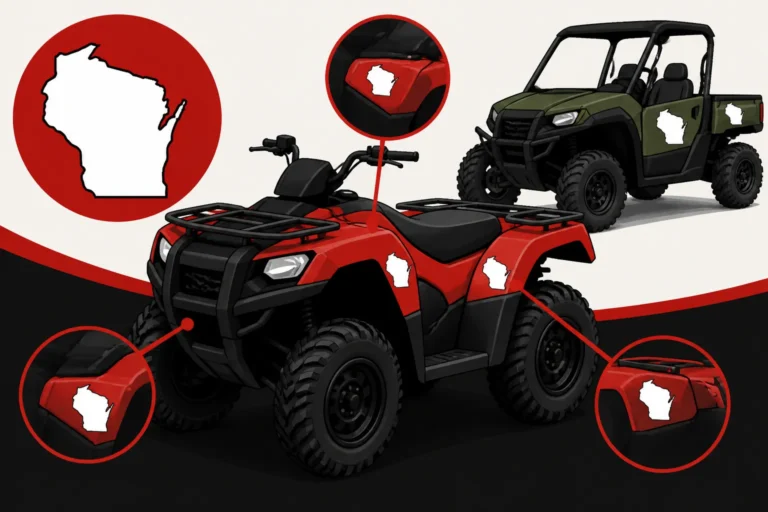
The Wisconsin DNR requires that these decals be affixed to the forward half of the machine, on both sides, in a location that is clearly visible. This means on the front fenders, the side panels of the hood, or sometimes on the frame itself, depending on the machine's design. The key is visibility. Wardens need to be able to quickly and easily see your registration decals without having to hunt for them. Avoid placing them in areas that might be easily obscured by mud, accessories like storage boxes, or by your riding gear.
Proper placement not only ensures compliance but also protects your investment. If a decal is placed in an area prone to rubbing or scraping, it's more likely to peel off or get damaged. If you find your [Decals That Came Off in the Cold], the DNR provides information on ordering replacements. Before applying, make sure the surface is clean and dry for optimal adhesion. Taking a moment to read the instructions that come with your decals or checking the DNR website for specific [Sticker Placement on a Wisconsin Machine] guidelines will save you a lot of hassle down the road.
Carrying Your Registration Card: On the Trail and Beyond
Just like you'd carry your driver's license in your car, you need to carry your ATV or UTV registration card with you whenever you're operating the machine, especially on public lands or routes. This physical card is your official proof of registration, and law enforcement or conservation wardens may ask to see it at any time.
Imagine this: You're out riding a beautiful trail, and a warden stops you to check registrations. Being able to quickly pull out your valid registration card shows you're a responsible rider and speeds up the interaction. Fumbling around or admitting you left it back at camp can lead to delays, further questioning, or even a citation for not carrying required documents. It's a small piece of paper, but it carries a lot of weight. Wardens are well within their rights to ask [What a Wisconsin Warden Asks a Rider For].
It's a good idea to keep your registration card in a waterproof bag or container, perhaps in a glove box, a sealed compartment on your machine, or even a zippered pocket on your riding jacket. Avoid keeping it in a place where it could easily get wet, lost, or damaged. Some riders even keep a laminated copy with them and the original in a safe place at home, though an official copy might still be requested. The main takeaway: ensure you have access to that card whenever you're out riding. Don't risk a fine for an easily avoidable oversight; make a habit of [Keeping the Registration Card With the Machine] at all times.
The Broader Picture: Insurance and Safety
While not always directly tied to registration, thinking about the broader picture of responsible riding includes considering insurance and safety. In Wisconsin, ATV and UTV insurance isn't universally mandated for all riding (though some municipal ordinances for road routes might require it, and it's always smart to check local rules). However, it is always a wise investment. Accidents happen, and having appropriate coverage can protect you from significant financial loss due to damage to your machine, medical expenses, or liability if you're involved in an incident with another party.
Many insurance providers offer specific ATV/UTV policies that can cover everything from collision and comprehensive damage to liability. It's worth exploring your options and understanding what kind of coverage makes sense for your machine and riding habits. You can learn more about this by checking [Insuring an ATV in Wisconsin].
Ultimately, obtaining and maintaining proper registration, displaying your decals correctly, and carrying your registration card are fundamental aspects of being a responsible ATV or UTV owner in Wisconsin. These steps not only keep you legal and help you avoid fines but also contribute to the health and future of our incredible trail system. So, get that paperwork sorted, grab your gear, and hit those trails with confidence and peace of mind!
Disclaimer
This article is for general informational purposes only and does not constitute professional advice. Laws, prices and regulations vary by location and change over time. Consult a qualified professional for guidance on your specific situation.